Childproof vapes: preventing accidental nicotine ingestion
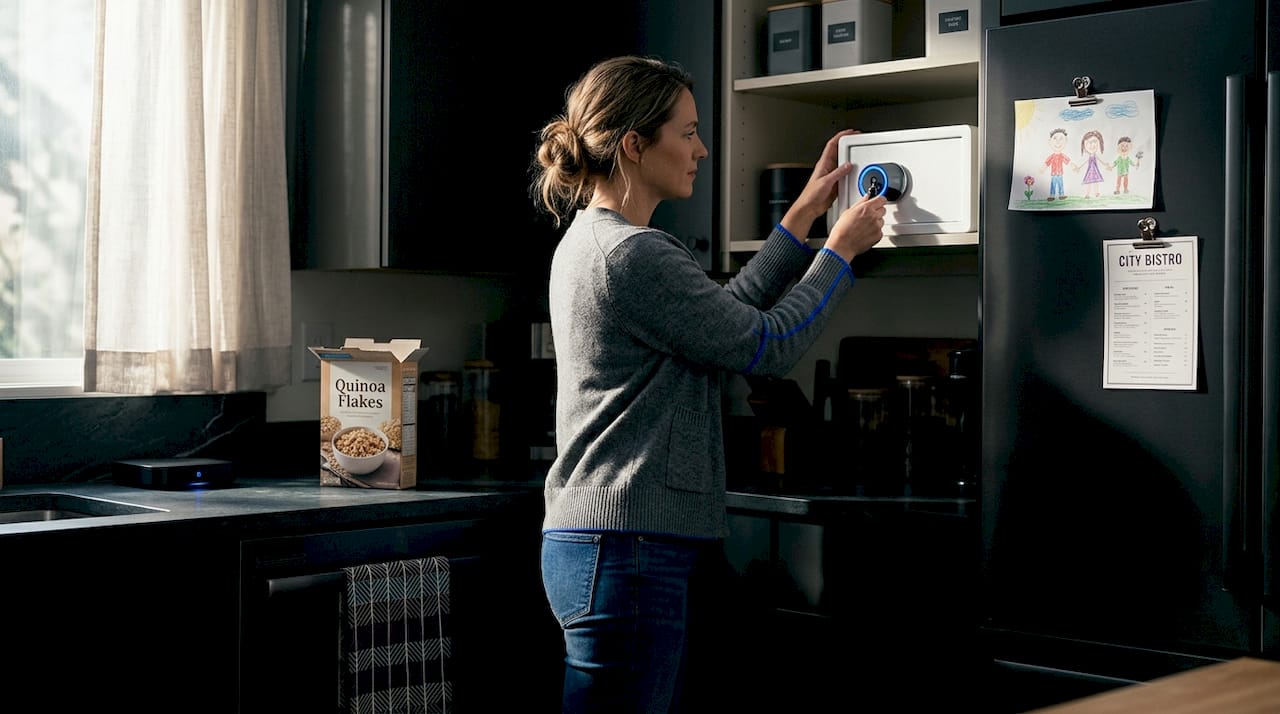
Childproof vapes: preventing accidental nicotine ingestion
Accidental nicotine ingestion among young children is a growing crisis hiding in plain sight. The FDA reports ~72% of nicotine pouch exposure cases involved children under 5 years old, a statistic that should alarm every parent who uses vape products at home. Many parents assume that child-resistant packaging is enough protection. It is not. Understanding what childproof vapes actually do, and what they cannot do, is the first step toward real prevention.
Table of Contents
- Understanding childproof vape technology
- The evidence: Why childproof vapes matter
- Beyond packaging: How parents can maximize safety
- Comparing childproof vs. standard vape packaging
- What most parents miss about childproofing vapes
- Explore childproof vape options at Cloud District
- Frequently asked questions
Key Takeaways
| Point | Details |
|---|---|
| Childproof reduces risk | Childproof vape features and packaging help prevent accidental nicotine exposure, but are not fully foolproof for children. |
| Real-world impact | Poison-center calls from home exposures have soared, emphasizing the urgent need for safety measures. |
| Combined approach | Best practices for safety include child-resistant packaging, secure storage, and proper handling. |
| Comparison matters | Standard vape packaging lacks critical safety features present in childproof designs. |
| Immediate medical action | If ingestion occurs, prompt medical attention is essential for child safety. |
Understanding childproof vape technology
The terms “childproof” and “child-resistant” are often used as if they mean the same thing. They do not. Childproof implies a product cannot be accessed by a child under any circumstances. Child-resistant is the accurate legal and regulatory term, and it sets a more realistic standard.
Child-resistant closures are designed as a barrier that young children typically cannot open within a specified timeframe. The operative phrase is “within a specified timeframe.” Given enough time, motivation, or improper handling by an adult, the barrier can fail.
Under the Poison Prevention Packaging Act (PPPA), manufacturers must test child-resistant packaging using actual child panels. Children ages 42 to 51 months attempt to open the package, and the packaging must resist at least 85% of them. That means up to 15% of children in that age group can open the packaging within 5 minutes. This is not a small number.
How the mechanisms work in vape products:
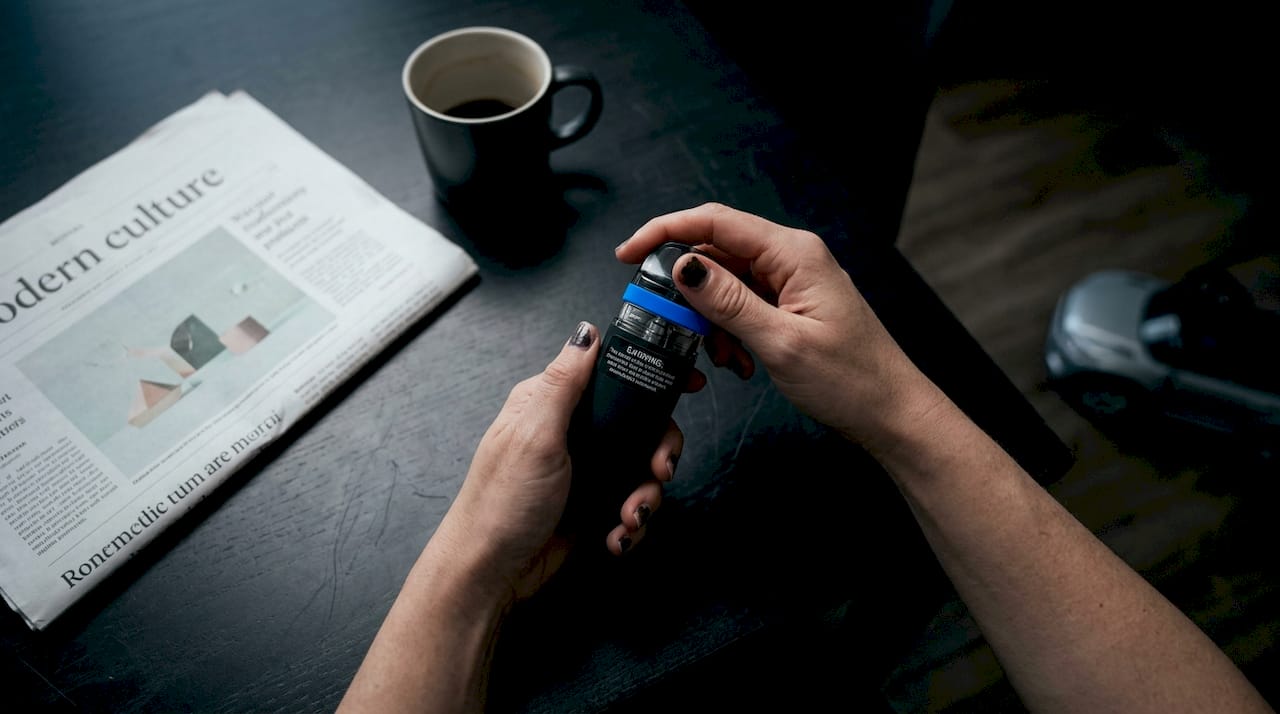
- Push-and-turn caps require simultaneous downward pressure and rotation, a two-step motion most young children cannot coordinate
- Squeeze-and-turn designs require lateral compression before rotation, adding another layer of complexity
- Locking slide mechanisms on some cartridges require a specific sequence of button presses or tab releases
- Reclosable child-resistant zippers on pouch packaging require grip strength and coordination that typically exceeds a toddler’s capability
- Blister packs with peelable foil on the adult side require peeling and pressing simultaneously, tasks very young children struggle with
“Child-resistant packaging is not childproof packaging. It is a barrier designed to delay, not permanently prevent, a child’s access.”
Understanding the distinction matters because it shifts parental behavior. If you believe the packaging is truly childproof, you may leave it on a coffee table or nightstand. If you understand it is only a timed barrier, you make different decisions about where you store it.
Products like those with strawberry blast pod safety features and blueberry watermelon childproof features incorporate updated closures designed to meet current PPPA standards, but even these require correct adult use and secure storage to provide full protection.
The evidence: Why childproof vapes matter
Once we understand how these childproof mechanisms work, it is essential to see the real-world impact and why they are increasingly needed.
The data is stark. Nicotine pouch ingestions in children under 6 increased by 763% from 2020 to 2023. That is not a gradual upward trend. That is a surge. Poison control centers across the country have logged thousands of calls related to children accessing nicotine products left within reach.
📊 Nicotine exposure risk snapshot
| Risk factor | Detail |
|---|---|
| Age group most affected | Children under 5 years old |
| Primary exposure location | Home environment |
| Most common product type | Nicotine pouches and vape liquids |
| Increase in ingestions (2020 to 2023) | 763% among children under 6 |
| Toxic dose threshold | As low as 1 to 4 mg per FDA data |
That last row deserves direct attention. Toxic effects have been reported with nicotine doses as low as 1 to 4 mg. A single nicotine pouch can contain anywhere from 3 mg to 12 mg of nicotine. A disposable vape can hold several milligrams of nicotine in liquid form. The margin between a child’s accidental exposure and a toxic dose is extremely thin.
The home is the primary risk environment. Vape products are typically stored in bedrooms, living rooms, cars, and bags, all places where children have access. The problem is not strangers. The problem is familiar environments and products that smell appealing, often featuring flavors that children find attractive.
Products like sour straws and sour apple ice use adult-oriented flavor profiles, but the reality is that sweet and fruity scents attract young children. This is not a reason to avoid these products as an adult. It is a reason to be more deliberate about storage and handling.
The case for child-resistant vapes over standard packaging:
Child-resistant vapes create a meaningful delay. Even a 5-minute barrier is often enough time for an adult to intervene. Standard packaging, by contrast, offers no barrier at all. A toddler can open a standard flip-top container in seconds. The difference between child-resistant and standard packaging in a scenario where a parent briefly leaves the room is significant.
Beyond packaging: How parents can maximize safety
Evidence backs the importance of childproof vapes, but effective prevention depends on what parents do beyond relying on packaging alone.
The FDA explicitly advises that parents and caregivers should safely store nicotine products in secure locations, away from children, and in their original packaging. This is a regulatory recommendation, not optional guidance.
Parent safety checklist: seven non-negotiable steps
- Store all vape products out of sight and reach. Use a locked drawer, cabinet, or high shelf that requires a step stool or key to access. Countertops, end tables, and purses do not qualify.
- Never leave a vape device unattended when children are present. A trip to the bathroom is long enough for a curious toddler to grab and interact with a device.
- Always return vape products to child-resistant packaging after use. Many people use the device and set it down rather than resealing the package. This defeats the purpose entirely.
- Dispose of empty or used devices properly. Residual nicotine in a “used” vape cartridge is still dangerous. Wrap it securely and discard it in a trash can that children cannot access.
- Educate older children. A 7-year-old can understand that certain items in the house are for adults only and can cause serious harm. Labeling a space or container as “adult only” creates a behavioral boundary.
- Keep poison control’s number accessible. In the United States, the number is 1-800-222-1222. Program it into your phone now, before you need it.
- Conduct a monthly home audit. Walk through each room and identify any location where vape products could be found. Treat it the same way you would a medication audit.
Pro Tip: Use a small lockbox specifically for vape products. These are inexpensive, widely available online, and provide a secondary barrier beyond child-resistant packaging. Products like thermal edition kits and devices like the lemon refresher fit easily into standard lockboxes.
If accidental exposure occurs:
Do not wait to see if symptoms develop. Call poison control immediately at 1-800-222-1222. If the child is unconscious, having seizures, or not breathing, call 911. Symptoms of nicotine poisoning in young children include vomiting, pale skin, rapid heart rate, agitation, and lethargy. These can appear within 15 to 30 minutes of ingestion.
Your home storage setup is the most important variable in preventing accidental exposure. Packaging helps. Storage closes the gap.
Comparing childproof vs. standard vape packaging
Now, let’s see how childproof measures stack up against standard packaging choices.
The functional differences between child-resistant and standard vape packaging are significant. Packaging systems must pass formal child panel and adult panel testing to receive a child-resistant designation. Standard packaging is not subject to this requirement.
Side-by-side comparison: child-resistant vs. standard packaging
| Feature | Child-resistant packaging | Standard packaging |
|---|---|---|
| Child panel testing required | Yes, per PPPA standards | No |
| Adult usability tested | Yes, 90% of adults must open within 5 min | No requirement |
| Opening mechanism complexity | Multi-step (push-turn, squeeze-turn, etc.) | Single step or no mechanism |
| Reclose functionality | Required by regulation | Optional or absent |
| Delay time for children | Typically 5+ minutes | Seconds to none |
| Regulatory approval required | Yes | No |
| Cost difference | Marginally higher | Lower |
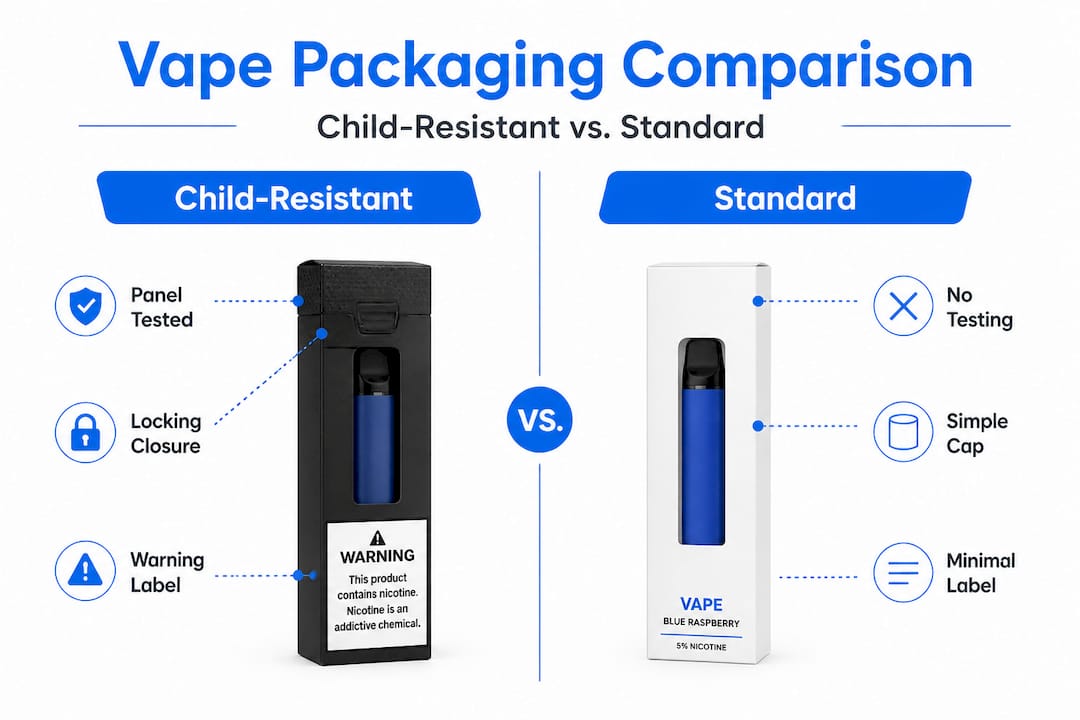
The adult panel test is often overlooked. To qualify as child-resistant, the packaging must also be openable by 90% of adults within 5 minutes, without reference to the instructions. This ensures that child resistance does not come at the expense of adult usability, a real concern for people with arthritis or limited hand strength.
What to look for when selecting vape packaging:
- Look for the words “child-resistant” on the label, not just “childproof”
- Check for a reclosable mechanism, not just an initial barrier
- Confirm the device or cartridge returns fully to its protected state after each use
- Avoid devices that require removal of the cartridge for use, as cartridges left out of packaging are unprotected
Products like the code red packaging exemplify how modern vape designs integrate compliant child-resistant features without compromising the user experience for adults.
It is also worth noting that child-resistant packaging applies to the product packaging, not the device itself. A device left plugged into a USB charger on a counter is not in its packaging and offers no child-resistant protection at all.
What most parents miss about childproofing vapes
Here is the perspective the safety guides rarely state plainly: the trust parents place in childproof packaging is often larger than the protection the packaging actually provides.
We hear “child-resistant” and we hear “safe.” These are not the same statement. Child-resistant packaging reduces risk but is not childproof. Some children gain access given time, strong motivation, or when adults mishandle the packaging. A toddler who watches a parent open the same package repeatedly will try to replicate the motion. Children are adaptive. Packaging is static.
The uncomfortable truth is that packaging regulations were designed to reduce mass exposure events, not to replace parental supervision. The 763% increase in accidental ingestions happened during a period when child-resistant packaging requirements already existed. Regulations were in place. Children were still being exposed.
The real safety layer is behavioral. It is the decision a parent makes about where the device goes after use. It is the habit of reclosing packaging every single time. It is treating a vape product with the same caution you would treat a prescription medication, because the risk level is comparable when the product is near children.
Products like triple berry lime come with child-resistant features that meet regulatory standards, but no manufacturer can control how a product is stored after purchase. That responsibility sits entirely with the adult user.
The combined approach is the only approach that actually works: compliant packaging plus locked storage plus consistent handling practices plus age-appropriate education for children in the home. Remove any one of these, and the remaining layers carry more risk than they should.
Explore childproof vape options at Cloud District
For parents who want the best protection and peace of mind, the place to start is with products designed from the ground up with compliance in mind.

Cloud District carries a curated selection of premium vape products that meet child-resistant packaging standards. Browse the full safety selection at Cloud District to find devices that fit both your preferences and your safety requirements. Products like the Blueberry Watermelon childproof vape and the Miami Mint childproof kit combine compliant packaging with high-quality performance. Orders are available for quick local pickup, and the Cloudz rewards program applies on every purchase, so responsible choices come with built-in value.
Frequently asked questions
Are childproof vapes completely safe for kids?
No. Child-resistant packaging reduces risk but does not eliminate it. Some children can still access products if packaging is left improperly closed or stored within reach.
How should I store childproof vapes to maximize safety?
Keep vapes in their original child-resistant packaging, fully reclosed, and stored in a locked or elevated location out of children’s reach. The FDA advises storing nicotine products in secure locations away from children in original packaging at all times.
What should I do if a child ingests vape liquid or nicotine?
Call poison control immediately at 1-800-222-1222 and seek emergency medical help if the child shows symptoms. The FDA recommends immediate medical attention after any accidental ingestion of a nicotine product.
What is the difference between childproof and child-resistant packaging?
Child-resistant closures are tested barriers intended to delay child access while remaining usable by adults. No packaging is truly childproof under regulatory standards, which is why the correct legal term is always “child-resistant.”