How to Choose a Vape: A Beginner's 2026 Guide
How to Choose a Vape: A Beginner’s 2026 Guide
Knowing how to choose a vape is harder than it looks. Walk into any vape shop or browse online and you are immediately hit with dozens of device types, dozens of nicotine options, and a wall of marketing claims that all sound equally convincing. The wrong choice wastes money and often kills motivation to keep going. The right choice makes everything click. This guide cuts through the noise and gives you a clear, practical framework for picking the device that actually fits your lifestyle, your draw style, and your goals.
Table of Contents
- Key takeaways
- How to choose a vape: understanding the four main device types
- Matching your draw style and nicotine needs
- Essential device features that affect daily satisfaction
- Common beginner mistakes and how to avoid them
- Your first week testing timeline
- My honest take after years in the vape space
- Start your vape search at Cloud District
- FAQ
Key takeaways
| Point | Details |
|---|---|
| Match device to experience level | Beginners benefit most from disposables or pod systems before moving to higher-complexity devices. |
| Align nicotine form to draw style | Nicotine salts pair with mouth-to-lung inhalation; freebase works better for direct-to-lung setups. |
| Check coil availability before buying | Devices with limited replacement coil support lead to forced upgrades and higher costs over time. |
| Prioritize battery and charging speed | Fast charging under one hour is now a baseline expectation for daily usability. |
| Test before committing fully | Spend the first week observing cravings and satisfaction before spending on a more advanced device. |
How to choose a vape: understanding the four main device types
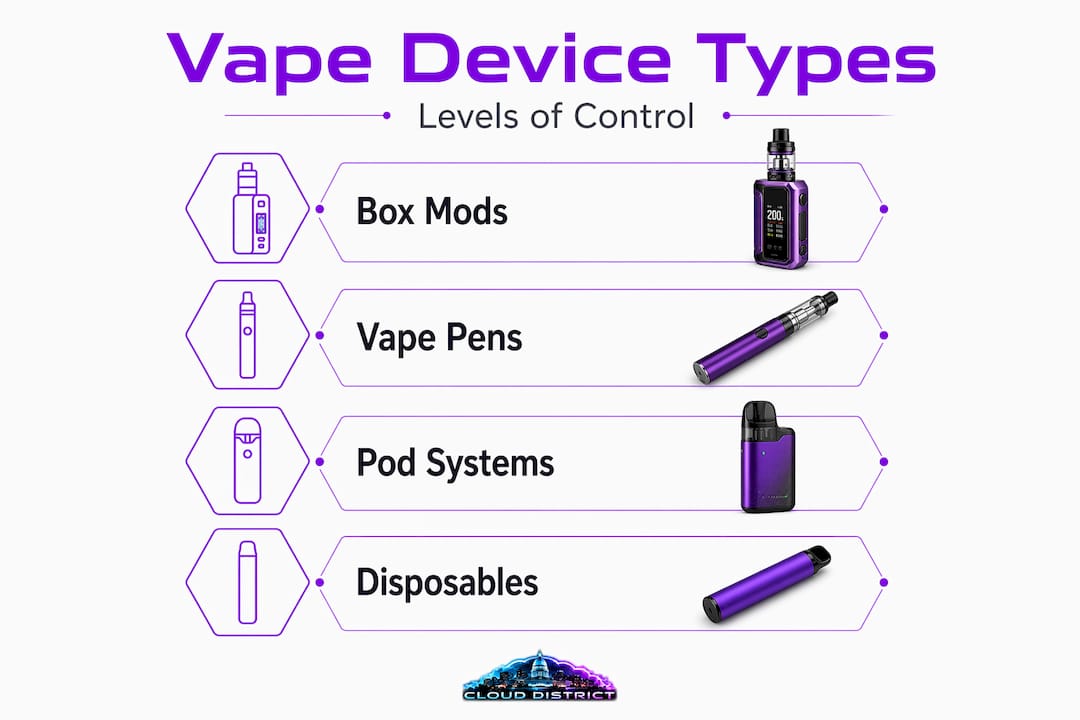
The first decision every new vaper faces is device category. There are four main types, and each one fits a different kind of user.
Disposable vapes are pre-filled, pre-charged, and ready to use out of the box. You do not fill anything, charge anything at the start, or adjust any settings. They are the lowest barrier to entry for anyone curious about vaping. The tradeoff is cost per puff. Over weeks, disposables cost more per session than refillable alternatives.
Pod systems are refillable or pre-filled devices that use replaceable pods. They are widely recommended for smokers switching to vaping because they deliver a satisfying, cigarette-like draw and work well with nicotine salts. Beginners choosing between disposables and pod systems often find pod devices make more financial sense after the first two weeks of consistent use.
Vape pens are slim, cylindrical devices that sit between pod systems and box mods in terms of power and complexity. They offer more vapor production than pods, work with a wider range of e-liquids, and are still simple enough for newer users. Learning about vape pens vs smoking can help you decide if this category fits your goals.
Box mods are the most powerful and customizable option. They allow wattage control, temperature settings, and compatibility with a wide range of tanks and coils. They are not for beginners. The learning curve is steep, and mistakes with settings can burn coils fast.
| Device type | Best for | Maintenance | Approx. upfront cost |
|---|---|---|---|
| Disposable | True beginners, casual use | None | Low |
| Pod system | Smokers switching to vaping | Low | Low to moderate |
| Vape pen | Intermediate users | Moderate | Moderate |
| Box mod | Experienced vapers | High | Moderate to high |
Matching your draw style and nicotine needs
This is where most beginners get it wrong, and it causes more dissatisfaction than any other factor.
There are two main ways to inhale vapor. Mouth-to-lung (MTL) mimics how you smoke a cigarette. You draw vapor into your mouth first, then inhale into your lungs. It produces less vapor, delivers a tighter draw, and feels familiar to smokers. Direct-to-lung (DTL) pulls vapor straight into the lungs in one motion. It produces large clouds, requires a looser, more open airflow, and works best at higher wattages.

Mismatching airflow and nicotine form creates harsh hits and ruins the experience. MTL devices pair with nicotine salts. DTL devices pair with freebase nicotine at lower concentrations.
Here is why that matters:
- Nicotine salts use benzoic acid to smooth out the throat hit at high concentrations (25mg to 50mg). They deliver nicotine fast and satisfy cravings efficiently. Ideal for MTL devices.
- Freebase nicotine is harsher at high concentrations but produces a more pronounced throat hit at lower levels. Common in sub-ohm, DTL setups. Pod kits run 8 to 30W and use high-resistance coils suited for salts; freebase devices typically run 40W or more with low-resistance coils.
Nicotine strength selection depends on your smoking history. Heavy smokers (a pack or more per day) generally need 35mg to 50mg salts in a pod system. Light or social smokers do well at 20mg to 25mg. If you have never smoked, start as low as possible because high nicotine causes dizziness and nausea quickly.
Pro Tip: If your first few puffs feel scratchy or overwhelming, do not assume vaping is not for you. Drop the nicotine strength by one level and check that your device airflow matches your draw style. Most discomfort comes from a mismatch, not a bad device.
Essential device features that affect daily satisfaction
Once you know your device type and draw style, the next set of factors to consider when buying a vape comes down to practical features that affect how much you enjoy using it every day.
Battery life and charging speed
Fast charging under one hour is now a baseline expectation. Devices that take three to four hours to charge feel outdated and disrupt daily use. Passthrough charging, which lets you vape while the device is plugged in, adds significant convenience for commuters and busy users.
Raw battery capacity numbers can mislead you. Devices with poor power regulation drain faster despite a higher mAh rating. A 1500mAh device with efficient chipset management often outlasts a 2000mAh device with sloppy regulation. Read user reviews that speak specifically to all-day battery performance, not just the spec sheet.
The benefits of rechargeable vape devices over disposables become most obvious here. Rechargeable options give you more control and cost less per session once you factor in battery longevity.
Coil and pod compatibility
This one factor can determine whether you enjoy a device for two years or abandon it in two months. Coil and pod ecosystem stability prevents unplanned upgrades and keeps ongoing costs predictable. Before you buy any refillable device, search for its replacement coils online. If they are hard to find or listed as discontinued, walk away.
Running a coil outside its recommended resistance range leads to burnt taste and wasted liquid. Each coil has a wattage and resistance window printed on the packaging. Stay inside that window every time.
Pro Tip: When evaluating a pod system, search the device name plus “coil availability 2026” before purchasing. Devices from brands with narrow distribution can leave you stranded if coil stock runs out.
Airflow control and mouthpiece comfort
Adjustable airflow changes the draw resistance and vapor temperature. Tighter airflow equals a more cigarette-like feel. Wider airflow equals more vapor and a cooler draw. If you are switching from smoking, start with the tightest airflow setting and open it gradually as you get comfortable.
Mouthpiece width and material affect comfort more than people expect. A narrow drip tip suits MTL vaping. A wide bore tip suits DTL. Try both before deciding if you have the option at a physical shop.
Common beginner mistakes and how to avoid them
New vapers make predictable mistakes. Knowing them in advance saves you money and frustration.
| Mistake | What happens | Fix |
|---|---|---|
| Nicotine too high | Dizziness, nausea, headache | Start at 20mg and adjust down |
| Chain vaping | Coil burns out fast, dry hits | Pause 30 to 60 seconds between puffs |
| Skipping coil priming | Immediate burnt taste | Saturate wick with e-liquid before first use |
| Buying from unverified sellers | Counterfeit devices, safety risks | Purchase only from authorized retailers |
| Ignoring battery safety | Overheating, leaking cells | Use the included charger and avoid extreme temperatures |
“The biggest source of new vaper frustration is not the device. It is starting with nicotine that is too strong, then blaming the hardware.” This single adjustment resolves the majority of early dissatisfaction reports.
Flavor choice also comes with real-world limitations. FDA draft guidance from March 2026 continues to restrict flavored vape product availability in certain markets, with particular focus on youth access. As a new adult vaper, you may find some flavor categories unavailable depending on your region. Understanding the regulatory context helps you set realistic expectations rather than being blindsided by limited options.
Chain vaping deserves its own mention. It is the single fastest way to destroy a coil. Each puff heats the coil, and the wick needs a moment to re-saturate with liquid. Skip that pause and you get a dry hit, which tastes burnt and damages the coil permanently. Twenty to thirty seconds between puffs extends coil life significantly.
Your first week testing timeline
A structured approach to your first week prevents snap judgments. Most new vapers give up on a perfectly good device because they evaluated it too quickly or used the wrong settings.
- Day 1 to 2: Use the device exactly as intended with the default settings. Take 5 to 10 puffs as you normally would and note your comfort level, throat sensation, and whether cravings are satisfied.
- Day 3: Evaluate nicotine satisfaction. Still reaching for cigarettes frequently? Your nicotine level may be too low. Feeling dizzy or getting headaches? It is too high. Adjust by one strength level.
- Day 4 to 5: Experiment with airflow. Tighten or loosen the draw and note which feels more natural. Most smokers settle on a tighter setting than they originally expected.
- Day 6 to 7: Reassess the device type decision. If you are going through a disposable faster than expected, or if satisfaction is inconsistent, a refillable pod system is likely the right next step.
- Week 2 and beyond: Once nicotine level and draw style feel right, evaluate flavor options. Do not change both nicotine strength and flavor at the same time. Change one variable at a time so you know what actually made the difference.
Patience is the underrated skill in vaping. The first few days rarely feel like the baseline. Give your setup a real trial before writing it off.
My honest take after years in the vape space
I have seen hundreds of new vapers cycle through devices unnecessarily, and the pattern is almost always the same. Someone buys a device based on what looks cool or what their friend uses, gets the nicotine wrong, decides vaping does not work for them, and quits. That is not a device problem. That is a matching problem.
In my experience, the most important factor is not vapor production, wattage, or flavor variety. It is whether the device fits your actual daily habits. A sleek box mod means nothing if you forget to charge it before work. A pod system that requires proprietary coils sold at only one retailer will frustrate you within a month.
What I have learned about coil ecosystems in particular: this is the one feature almost every beginner ignores and almost every experienced vaper obsesses over. Replacement pod and coil availability is worth researching more than any spec on the packaging.
My unconventional take on nicotine strength: most guides tell beginners to start high and taper down. I would argue you are better off starting slightly lower than you think you need and building up if required. The discomfort from too much nicotine is worse and more discouraging than a mild craving, and it creates a negative association with vaping that is hard to shake early on.
Give yourself two weeks before drawing any conclusions. Experimentation is not failure. It is how you find what actually works.
— Justin
Start your vape search at Cloud District

If you are ready to put this guide into practice, Cloud District has the products to match every stage of your vaping journey. The catalog covers disposable vapes for zero-commitment beginners, pod systems for smokers making the switch, and popular brands known for consistency and flavor quality. The Geek Bar Pulse line is a strong starting point for new vapers looking for reliable performance without complex setup. For those ready to explore flavors, options like Strawberry Mango and Strawberry Kiwi Thermal Edition represent the kind of variety available across the platform. Cloud District’s Cloudz rewards system earns you points on every purchase, and local pickup keeps things fast. Browse the full selection at Cloud District and find the device that fits your preferences without guesswork.
FAQ
What type of vape is best for beginners?
Pod systems and disposable vapes are the two most beginner-friendly options. Disposables require no setup, while pod systems offer better long-term value for those switching from cigarettes.
How do I know which nicotine strength to choose?
Heavy smokers typically do well with 35mg to 50mg nicotine salt options. Light smokers or those new to nicotine should start at 20mg or lower and adjust based on cravings and physical comfort.
What is the difference between MTL and DTL vaping?
Mouth-to-lung (MTL) draws vapor into the mouth before the lungs, mimicking a cigarette. Direct-to-lung (DTL) pulls vapor straight into the lungs and produces more vapor at higher wattages.
How often should I replace my vape coil?
Most coils last one to two weeks depending on usage frequency and e-liquid sweetness level. A burnt or muted flavor is the clearest sign a replacement is needed.
Does flavor availability vary by location?
Yes. FDA regulatory guidance in 2026 continues to influence which flavored vape products are legally marketed and sold in the United States, so availability varies by region and retailer compliance.