The Role of Technology in Vaping: 2026 Guide

The Role of Technology in Vaping: 2026 Guide
Technology defines every aspect of modern vaping, from how devices verify user age to how researchers measure puff behavior down to the microsecond. The role of technology in vaping now spans Device Access Restriction (DAR) systems, smart hardware innovations, behavioral monitoring instruments, and machine learning models that personalize cessation support. Manufacturers like VAPORESSO, IKE Tech, and Glas are driving this shift, while the FDA’s 2026 regulatory guidance is forcing the industry to treat compliance as a built-in product feature rather than an afterthought. Understanding these systems tells you exactly where vaping is headed and why.
How does technology control who can access a vaping device?
Device Access Restriction is the FDA’s term for continuous, in-use age verification technology embedded directly into vaping hardware. The FDA’s 2026 draft guidance defines DAR as a system that enforces age restrictions every single time the device is activated, not just at the point of purchase. This is a fundamental shift from retail-level ID checks to product-level enforcement.
IKE Tech’s approach uses Bluetooth Low Energy (BLE) pairing between the vape device and a verified smartphone app. The system requires biometric check-ins and can tokenize identity data using blockchain, making age-gating a compliance layer built into the product itself. IKE Tech and Charlie’s SBX reported 100% blocking of underage activation and 100% adult verification success in human factors validation studies. That result matters because it demonstrates the technology works in controlled conditions, even if real-world deployment introduces new variables.
The FDA’s first authorized flavored vape, the Glas fruit-flavored device, received approval partly because of its integrated DAR system. This sets a precedent: flavor authorization and access control technology are now linked in the regulatory process. Manufacturers without DAR infrastructure face a narrowing path to market approval for non-tobacco flavors.
| Feature | DAR-enabled devices | Standard devices |
|---|---|---|
| Age verification method | Biometric + BLE app pairing | Retail ID check only |
| Verification frequency | Every use | Point of sale only |
| Device behavior when unverified | Auto-deactivates | No restriction |
| Regulatory pathway | Broader flavor authorization possible | Limited to tobacco flavors |
Pro Tip: If you rely on a DAR-enabled device, keep your smartphone charged and the paired app updated. A disconnected phone triggers automatic device deactivation, which disrupts your session entirely.
The trade-off is real. Age-gating technology introduces consumer friction through app installation requirements and constant Bluetooth dependency. Human factors studies show roughly 1% usability errors and a 91% app ease-of-use rating, which means the system is functional but not frictionless. For adult smokers switching to vaping as a harm reduction tool, added friction could reduce uptake. That tension between safety and convenience is the central design challenge for every manufacturer building DAR systems today. You can read more about how retailers handle vape age verification at the compliance level.
What hardware innovations are improving the vaping experience?
Technology advancements in vaping hardware are moving faster in 2026 than at any prior point in the industry’s history. The focus has shifted from basic functionality to precision engineering of airflow, coil saturation, charging speed, and flavor delivery. These are not cosmetic upgrades. They directly affect how satisfying and reliable a device is to use.
VAPORESSO’s XROS 6 is the clearest current example of this trend. Its Smart Prime technology saturates the coil in 60 seconds, eliminating the dry hit problem that frustrates users of standard pod systems. The device also features a Venturi airflow system that produces a smoother draw and a 20% improvement in taste quality per VAPORESSO’s internal testing. These are measurable performance gains, not marketing language.
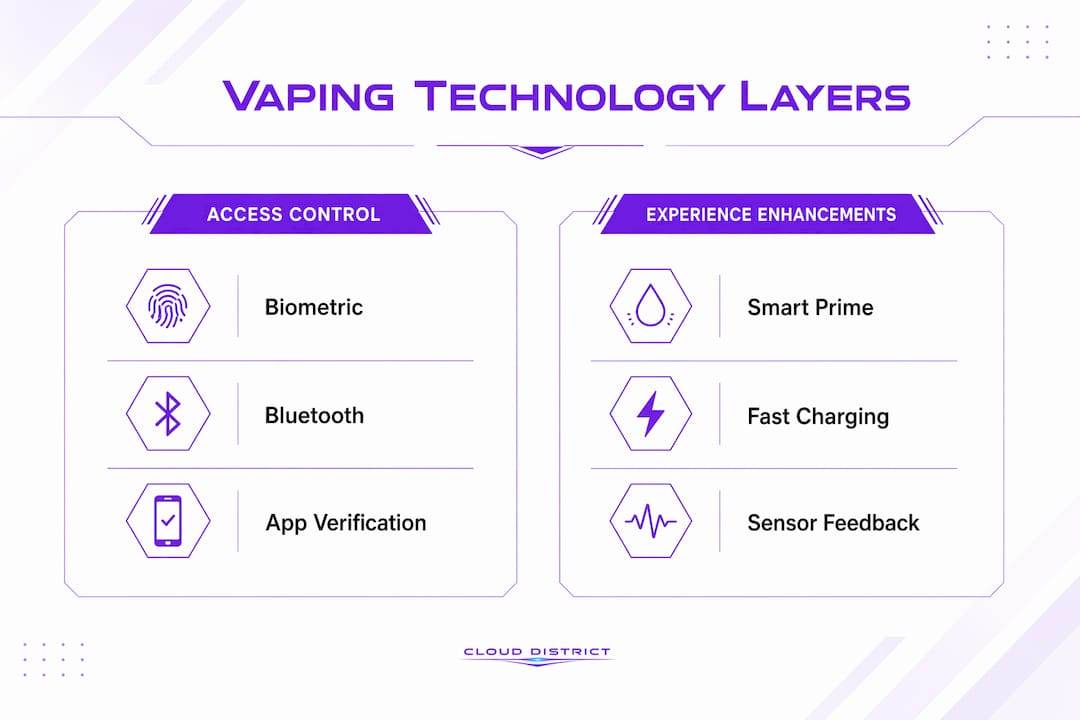
Charging technology has also advanced significantly. The XROS 6 supports 3A quick charge, reaching 50% battery in 10 minutes. For daily users, that means a usable device in the time it takes to make coffee. Fast charging removes one of the most common practical complaints about pod systems and disposables alike.
Key hardware improvements defining 2026 vaping device technology:
- Coil saturation speed: Smart Prime systems reduce wait time from several minutes to 60 seconds, preventing dry hits on first use
- Airflow engineering: Venturi-style channels create consistent draw resistance without mechanical sliders that wear out
- Quick charge capability: 3A charging standards bring pod devices in line with modern smartphone charging expectations
- Power presets: User-selectable wattage settings let you match vapor output to your preferred nicotine delivery speed
- Noise reduction: Improved coil housing designs reduce the gurgling and crackling sounds common in older atomizer builds
The trade-off with higher-spec hardware is complexity. More sensors, more firmware, and more moving parts mean more potential failure points. Devices like the XROS 6 require firmware updates and app connectivity for full feature access, which adds a layer of technical management that simpler disposables do not. For users who want to understand all the features available in smart vaping systems, the performance gains justify the learning curve.
How do researchers measure vaping behavior with technology?
Measurement technology and consumer-facing experience technology serve entirely different purposes, and conflating them leads to confusion about what vaping tech actually does. The FRIENDS passive vaping monitor is the leading example of research-grade instrumentation built specifically to capture behavioral data.
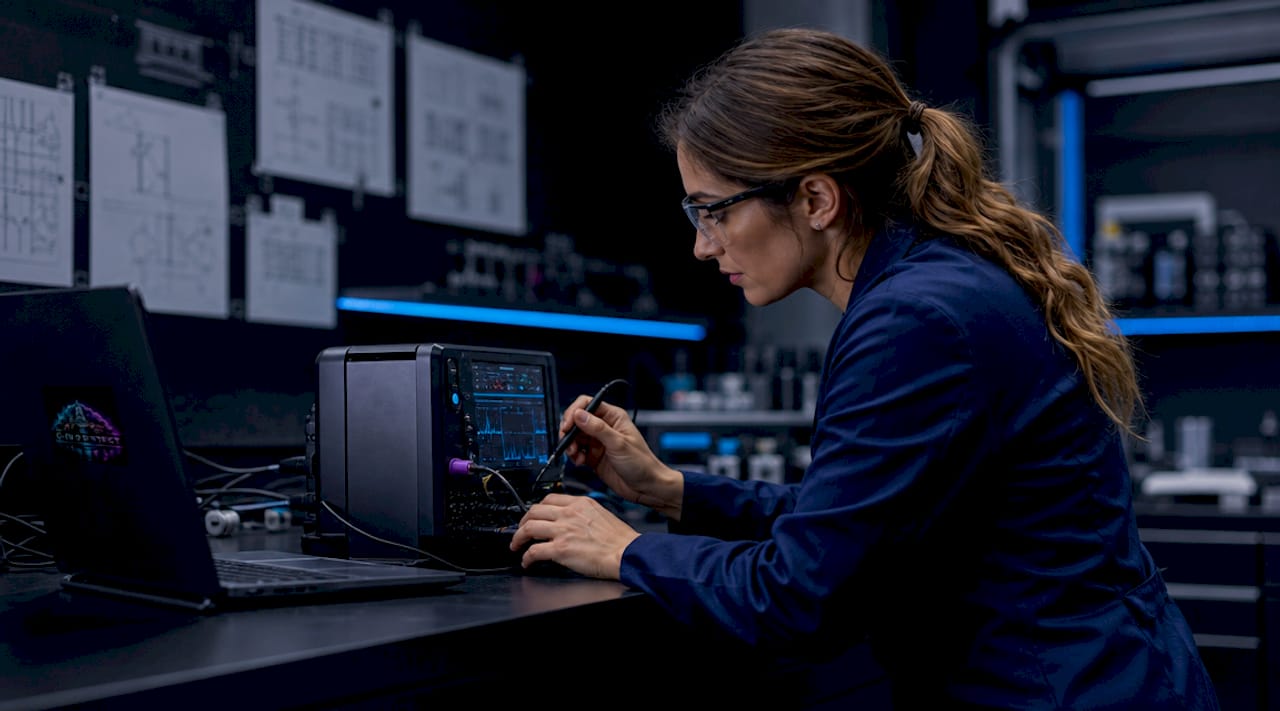
The FRIENDS device records puff events, touch, and temperature with 15-microsecond timestamps. That level of precision allows researchers to distinguish individual puffs within a single session, track topography changes over days, and correlate behavior with nicotine dependence markers. An open-source graphical user interface (GUI) extracts and visualizes this data, making the system accessible to research teams without proprietary software dependencies.
| FRIENDS system capability | Research application |
|---|---|
| 15-microsecond timestamps | Precise puff interval analysis |
| Touch and temperature sensors | Full topography capture per session |
| 10-day continuous monitoring | Longitudinal behavioral pattern tracking |
| Open-source GUI | Reproducible data extraction across labs |
The practical value of this technology is reproducibility. Self-reported vaping data is notoriously unreliable. Users underestimate frequency, misremember session length, and conflate nicotine products. The FRIENDS system’s engineering balances high temporal precision with wearability to capture reliable data over 10 days without disrupting normal behavior. That balance is difficult to achieve and represents genuine progress in behavioral science instrumentation.
The system’s design also has implications beyond nicotine research. The same sensor architecture applies to THC vaporizers, making FRIENDS a platform for studying any inhalation behavior. For product designers, the data generated by tools like FRIENDS informs coil temperature targets, airflow resistance settings, and session duration assumptions that feed directly into hardware decisions.
Can machine learning predict and prevent vaping relapse?
Machine learning models now predict individual vaping relapse risk with measurable accuracy, and that capability is being integrated into smartphone apps that deliver real-time, adaptive cessation support. This represents a direct application of data science to one of public health’s most persistent challenges.
A published ML model analyzing smartphone app data achieved a C-index of 0.751 for predicting relapse probability in young people attempting to quit vaping. A C-index above 0.7 indicates clinically useful discrimination. The model’s key predictors include self-confidence, intention to quit, average e-liquid use, time to first vape of the day, and mood trend. These variables are collected passively through app interactions, removing the burden of manual logging from the user.
The advantage over generic cessation programs is specificity. A standard quit plan treats all users identically. An ML-driven app adjusts intervention timing, message content, and support intensity based on your individual risk profile at any given moment. If your mood trend deteriorates on a Tuesday afternoon, the app responds before you relapse rather than after.
Pro Tip: When using a cessation app, grant full notification permissions. Personalized digital interventions depend on timely delivery of adaptive prompts. Blocking notifications removes the mechanism that makes ML-driven support more effective than static quit guides.
Current limitations are worth acknowledging. Most ML cessation models are trained on young adult populations, which limits generalizability to older users with longer vaping histories. The models also require consistent app engagement to generate accurate predictions. Users who open the app sporadically produce sparse data, which degrades model performance. Future development needs to address passive data collection methods that reduce reliance on active user input while maintaining prediction accuracy.
Key takeaways
Technology in vaping now operates across four distinct layers: access control, hardware performance, behavioral measurement, and digital health intervention, each with direct consequences for users, researchers, and regulators.
| Point | Details |
|---|---|
| DAR systems enforce age restrictions | Biometric and BLE-based verification activates every use, not just at purchase. |
| Hardware precision drives satisfaction | Smart Prime coil tech and Venturi airflow produce measurable gains in taste and draw quality. |
| Behavioral monitors outperform self-reporting | FRIENDS captures 15-microsecond puff data over 10 days for reliable research metrics. |
| ML models personalize cessation | A C-index of 0.751 confirms predictive accuracy for relapse risk in quit-vaping apps. |
| Friction is the cost of safety tech | DAR systems reduce youth access but introduce Bluetooth and app dependencies for adult users. |
Where technology gets it right and where it still falls short
I’ve tracked vaping device technology closely enough to say this plainly: the engineering is ahead of the user experience design. Age-gating systems like IKE Tech’s BLE pairing work. The validation data is solid. But requiring a charged smartphone, an installed app, and a successful biometric check every time you want to use a device is a friction stack that will push some adult users back toward combustible cigarettes. That outcome is the opposite of the harm reduction goal the technology is meant to serve.
The hardware side is more straightforwardly positive. VAPORESSO’s Smart Prime technology and fast charging are genuine quality-of-life improvements with no meaningful downside. These are the kinds of advances that make vaping more reliable and more satisfying without adding complexity that alienates less tech-oriented users.
What I find most promising is the ML cessation work. A C-index of 0.751 is not perfect, but it is clinically meaningful. The real opportunity is in passive data collection. If apps can infer relapse risk from behavioral signals without requiring active input, adoption rates will climb and prediction accuracy will improve simultaneously. That feedback loop is where personalized vaping cessation support becomes genuinely transformative.
The industry needs to close the gap between what the technology can do and how usable it actually is in daily life. Continuous monitoring is the right direction. Biometric friction that causes a device to lock mid-session is not. The next generation of DAR systems needs to solve verification without punishing the verified user.
— Justin
Explore the latest vaping technology at Cloud District

Cloud District carries products that reflect exactly the hardware advances covered in this article. The Geek Bar lineup includes devices built for consistent performance, reliable draw quality, and the kind of flavor delivery that modern coil technology makes possible. For users who want to step into more advanced hardware, the RAZ VUE 50K Kit showcases current device specs in a format designed for extended use. Cloud District’s rewards program, Cloudz, applies to every purchase, so you earn on every order. Browse the full catalog at Cloud District and find devices that match your preferences.
FAQ
What is Device Access Restriction in vaping?
Device Access Restriction (DAR) is a continuous age verification system embedded in vaping hardware, defined in the FDA’s 2026 draft guidance. It verifies user age every time the device is activated through mechanisms like biometric checks and Bluetooth app pairing.
How does smart vaping technology affect daily use?
Smart vaping systems that require phone proximity and biometric verification will deactivate automatically when the paired device is out of range or verification fails. This shapes usage patterns and requires users to maintain app connectivity throughout the day.
What is the FRIENDS vaping monitor used for?
The FRIENDS device is a research instrument that records puff events, touch, and temperature with 15-microsecond timestamps over up to 10 days. It provides objective behavioral data for nicotine dependence research and product design studies.
Can an app actually help you quit vaping?
Machine learning models analyzing app data have achieved a C-index of 0.751 for predicting relapse risk, which indicates clinically useful accuracy. These models personalize intervention timing and content based on individual predictors like mood trend and time to first vape.
Do age-gating systems actually block underage use?
IKE Tech’s validation studies reported 100% blocking of underage activation with approximately 1% usability errors among verified adult users. The technology works in controlled conditions, though real-world deployment introduces variables like phone battery and connectivity that can affect performance.