Vape Customization Explained: Options, Tips, and Benefits
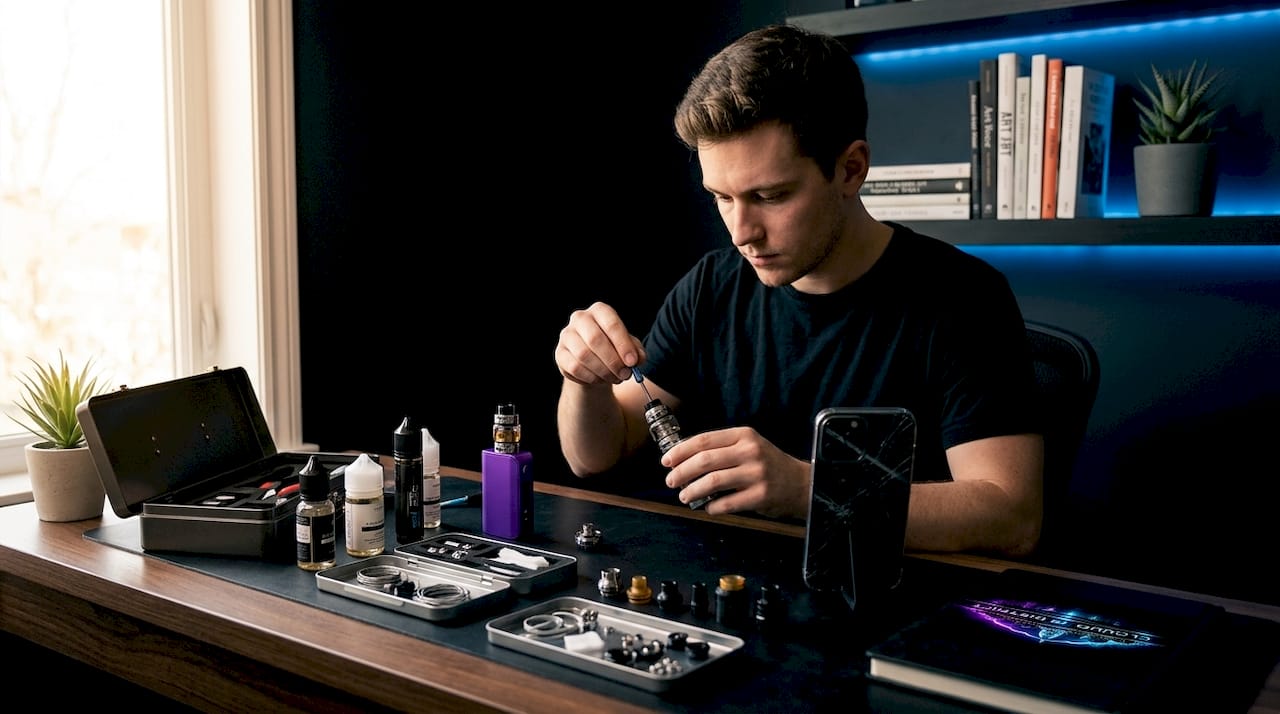
Vape Customization Explained: Options, Tips, and Benefits
Most vapers assume customization stops at choosing a color or slapping on a skin. It doesn’t. What is vape customization, really? It’s the deliberate modification of hardware, software, and e-liquid to shape your vaping experience at a technical level. That means adjusting wattage, building coils, blending flavors, and fine-tuning firmware. Whether you’re after denser clouds, sharper flavor, or a device that reflects your personal style, customization gives you control that a factory-default setup simply cannot offer. This guide breaks down every layer of vape customization so you can make informed, safe, and rewarding changes to your setup.
Table of Contents
- Key takeaways
- What is vape customization: a complete breakdown
- Vape mod customization: performance and safety
- E-liquid customization and flavor blending
- Advanced customization: firmware, apps, and aesthetics
- Practical steps for beginners
- My take on what customization actually demands
- Find the right products at Cloud District
- FAQ
Key takeaways
| Point | Details |
|---|---|
| Customization is technical, not just visual | Vape customization covers hardware, software, and e-liquid adjustments that directly affect flavor and vapor quality. |
| Battery safety is non-negotiable | Matching coil resistance to battery CDR is the single most important safety rule in mod customization. |
| E-liquid ratios change everything | Adjusting PG/VG ratios and nicotine strength lets you control throat hit, smoothness, and cloud production. |
| Start small, build gradually | Beginners should begin with drip tips and coil swaps before moving to wattage tuning or advanced builds. |
| Advanced features exist beyond hardware | Firmware upgrades, Bluetooth apps, and modular design options offer next-level control over device performance. |
What is vape customization: a complete breakdown
Vape customization is the process of modifying your device and liquids to produce a specific outcome. That outcome might be a particular flavor intensity, a target cloud volume, a precise nicotine delivery, or simply a device that looks unlike anything on the shelf. The practice spans three broad categories: hardware, software, and e-liquid.
Hardware customization covers everything physical. This includes:
- Mods and boxes: The main body of the device, often swappable with different battery configurations and wattage ranges
- Coils: Resistance wire wound into a coil shape that heats e-liquid into vapor. Coil material, gauge, and configuration directly affect flavor and heat
- Tanks and atomizers: Determine e-liquid capacity and vapor delivery style, from mouth-to-lung to direct-lung hits
- Airflow systems: Adjustable airflow rings control how much air mixes with vapor, affecting temperature and throat sensation
- Drip tips: The mouthpiece, available in dozens of materials and shapes that alter the draw feel and heat of vapor
Software customization is where modern devices separate themselves. High-end regulated mods now support firmware and app connectivity features that let users monitor puff counts, battery health, and device performance in real time. Some devices connect to smartphone apps via Bluetooth, allowing parameter changes without touching the device itself.
E-liquid personalization is arguably the most accessible entry point. E-liquid customization involves blending different flavor concentrates and adjusting PG/VG ratios to influence throat hit and vapor production. Nicotine strength adds another dimension, letting you dial in the exact effect you want.
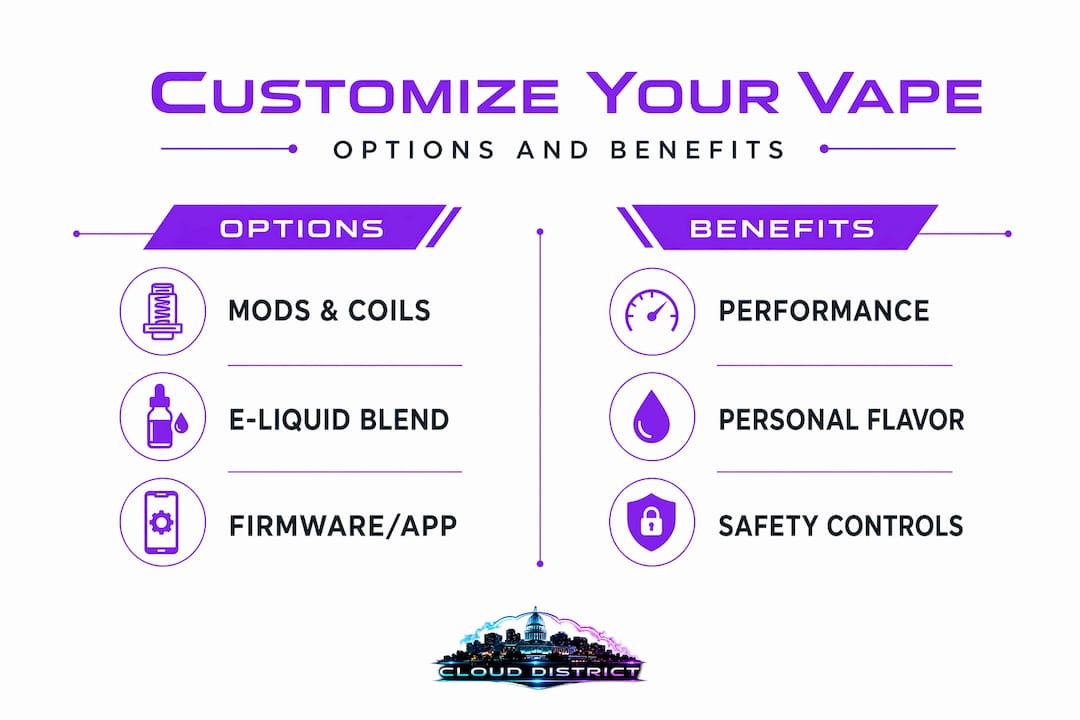
| Customization Category | Key Variables | Primary Impact |
|---|---|---|
| Hardware (mods, coils, tanks) | Wattage, resistance, airflow | Vapor density, flavor intensity, temperature |
| Software (firmware, apps) | Settings, monitoring tools | Device control, safety tracking |
| E-liquid | PG/VG ratio, nicotine strength, flavor | Throat hit, smoothness, taste profile |
| Aesthetics | Skins, LEDs, engraving | Personal expression, device identity |
Vape mod customization: performance and safety
Vape mod customization is where the most significant performance gains happen. And it’s also where the most serious risks live if you don’t know what you’re doing.
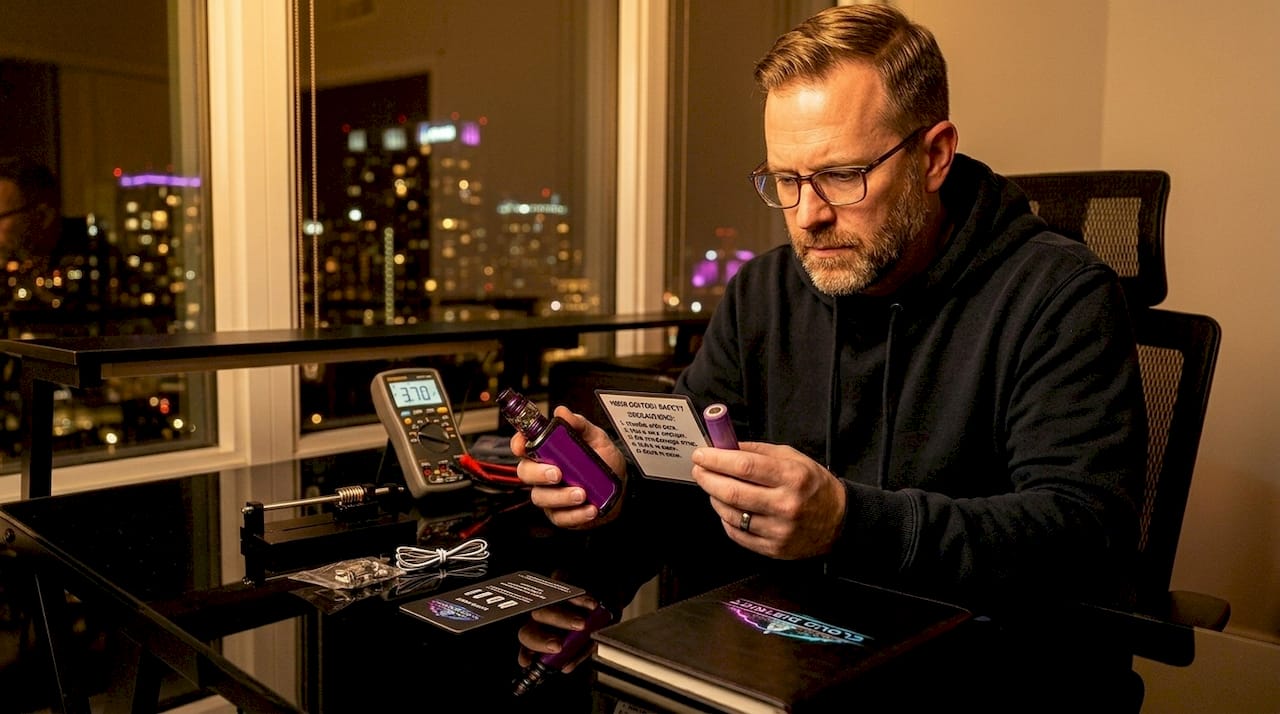
The two main control points on a regulated mod are wattage and temperature control. Higher wattage delivers more heat to the coil, which vaporizes e-liquid faster and produces larger, warmer clouds. Temperature control mode limits the coil from exceeding a set temperature, which prevents dry hits and extends coil life.
Coil resistance is the technical heart of mod customization. Lower resistance coils (sub-ohm, below 1.0 ohm) draw more current and run hotter, producing larger vapor production. Higher resistance coils are cooler and draw less power, which suits mouth-to-lung vapers who prefer a cigarette-like experience.
Here’s the safety-critical part: battery CDR matching to coil resistance is a primary cause of device failure and overheating when ignored. CDR stands for continuous discharge rating. If your coil draws more amps than your battery can safely supply, the battery overheats. That’s how vape incidents happen.
Regulated mods provide electronic protections like short-circuit safeguards and low-voltage cutoff, giving less-experienced users a wider margin for error compared to mechanical mods. Mechanical mods have no onboard protection. They are purely for experienced builders who understand Ohms law well enough to calculate safe parameters before firing.
For battery selection specifically: authentic high-drain 18650 batteries with proper wraps and verified CDR ratings are the standard for sub-ohm and mechanical builds. Check battery age and physical condition regularly. A battery with a damaged wrap or swollen casing should be retired immediately.
Pro Tip: Start every new coil build by firing at 60% of your target wattage. Hold the fire button for two seconds, release, and inspect the coil for even heating from the center outward. Adjust from there in small increments rather than jumping straight to your preferred wattage.
For a deeper look at coil types and resistance ranges, Cloud District’s guide on vape coil types covers the full spectrum of coil materials and configurations.
E-liquid customization and flavor blending
E-liquid is where customization becomes genuinely creative. The formula is simple: propylene glycol (PG), vegetable glycerin (VG), flavoring, and optional nicotine. Changing the ratio of any of these components changes the character of every single draw.
Here’s how the key variables work in practice:
-
PG/VG ratio and its effects: A higher PG ratio (70PG/30VG, for example) produces a stronger throat hit, more defined flavor, and thinner vapor. Higher VG ratios (70VG/30PG or 80VG/20PG) produce thick, smooth clouds with less throat sensation. Most direct-lung vapers run high-VG blends.
-
Nicotine strength selection: Standard options range from 0mg to 50mg per ml depending on the product format. Lower strengths (3mg to 6mg) suit cloud chasers using high-wattage builds. Higher strengths serve users who want a quicker nicotine response from lower-power devices. Balancing nicotine strength with your wattage setting is what separates a satisfying hit from an overwhelming one.
-
Flavor concentrate blending: DIY mixers combine individual concentrates from flavor manufacturers to create profiles that don’t exist in any premixed bottle. A strawberry kiwi blend, for instance, might use a base strawberry, a bright top-note fruit concentrate, and a touch of cool to create depth. Premixed options from reputable brands are the safer starting point for anyone new to flavor customization.
-
Quality and safety of DIY liquids: When mixing your own blends, use food-grade concentrates from verified suppliers. Never use essential oils or fragrance oils not designed for inhalation. Nicotine in liquid form at high concentration is hazardous to skin contact and requires proper handling equipment.
Regulations in different markets affect what’s available. Know the rules in your state or region before ordering high-nicotine liquids or large-volume bottles.
Advanced customization: firmware, apps, and aesthetics
Beyond hardware and liquids, modern devices offer a layer of customization most vapers never explore. This is where vape customization options start to resemble consumer tech.
Firmware upgrades allow manufacturers to release performance improvements after the device ships. Users can download updated firmware from the manufacturer’s website and install it via USB cable. This can unlock new operating modes, fix bugs, or add new temperature control profiles for different coil materials like nickel, titanium, or stainless steel.
Smartphone connectivity takes things further. Some devices support IoT-style monitoring, letting users track puff counts and battery status from an app. This is particularly useful for users managing nicotine intake or monitoring device health over time.
Aesthetic customization includes:
- Device skins and wraps: Vinyl wraps protect the device and let you express personal style without permanent modification
- LED customization: Many mods allow custom LED colors and patterns to be programmed through the device menu
- Engraving: Laser engraving services exist specifically for vape hardware, adding names, logos, or designs to metal surfaces
- Modular design systems: Custom vapes using modular systems allow users to replace or upgrade individual parts without discarding the entire device. This approach supports both personalized adjustments over time and a reduction in hardware waste.
Pro Tip: Before installing third-party firmware, verify the source is the device manufacturer’s official channel. Unofficial firmware on a regulated mod can disable safety protections. If in doubt, stick with factory firmware and use the device menu for parameter changes.
Practical steps for beginners
Getting started with vape customization doesn’t require advanced technical knowledge. It requires a methodical approach. Starting with small adjustments like coil swaps or drip tips reduces safety risks while helping you find comfortable settings before committing to more complex modifications.
Follow this order when starting out:
- Step one: Swap your drip tip. It’s the lowest-risk change you can make and immediately affects comfort and draw temperature.
- Step two: Try a different coil resistance within your tank’s supported range. Most tanks list compatible coil resistances on the packaging.
- Step three: Adjust wattage in small steps. Increase by 5W at a time and evaluate flavor and vapor before going higher.
- Step four: Experiment with PG/VG ratios in your e-liquid. Buy two bottles of the same flavor at different ratios and compare them directly.
- Step five: Once you’re comfortable with the above, explore battery options. Check your device’s amp limit, then select batteries whose CDR exceeds that limit.
Regular device maintenance is part of safe customization. Clean your tank every time you change flavors. Inspect coils weekly. Check battery wraps each time you handle the battery. For a practical overview of accessories that support this upkeep, the Cloud District guide on vape accessories is worth bookmarking.
Always verify age requirements and local purchase regulations when buying customization components. All products must be purchased by individuals 21 years or older, per federal law. Cloud District’s resource on age verification compliance provides specific legal context for purchasing vape products.
My take on what customization actually demands
I’ve watched a lot of vapers treat customization like a menu. Pick a coil. Pick a wattage. Pick a skin. Call it done. What I’ve learned after spending years with this hobby is that real customization is an iterative process. You change one variable, observe the result, then change another. It’s more like tuning an instrument than assembling furniture.
The most common mistake I see is treating battery safety as optional knowledge. Understand Ohms law before you touch a mechanical mod. Not because it sounds impressive, but because Ohms law is foundational for customizing coil builds safely. Vapers who skip this step are the ones who end up with damaged devices or worse.
What I find genuinely interesting about vape customization is how it mirrors broader maker culture. People who build their own coils share the same mindset as people who build mechanical keyboards or modify their cars. The goal isn’t just a better product. It’s ownership of the experience. That’s something worth taking seriously.
My recommendation: join an active online vaping community before you spend money on advanced components. You’ll learn more in one week of reading experienced builders’ posts than you will from most product descriptions. Then experiment deliberately. One change at a time.
— Justin
Find the right products at Cloud District
If you’re ready to put customization into practice, having access to quality products makes the difference. Cloud District carries a curated selection of disposable vapes and accessories from brands built with the discerning vaper in mind. Whether you’re exploring different flavor profiles or picking up hardware for a new build, the product lineup is organized for easy browsing and fast local pickup.

Cloud District’s platform also features deals and a rewards system that credits you on every purchase through the Cloudz program. For vapers who want to explore brand-specific options, the brands catalog makes it straightforward to find devices and e-liquids from recognized names. All products are available exclusively to customers who are 21 years of age or older in compliance with federal law.
FAQ
What does vape customization actually mean?
Vape customization refers to modifying a vaping device’s hardware, software, or e-liquid to change performance, flavor, or appearance. It goes beyond looks to include coil builds, wattage adjustments, PG/VG ratios, and firmware settings.
How do I safely start customizing my vape?
Begin with low-risk changes like swapping drip tips or trying different coil resistances within your tank’s supported range. Always verify your battery’s CDR matches your coil’s current draw before adjusting wattage.
What is the safest type of vape mod for customization?
Regulated mods are safer for customization because they include electronic protections like short-circuit cutoffs and low-voltage shutoff. Mechanical mods offer no onboard protection and require advanced knowledge of Ohms law to use safely.
Can I mix my own e-liquid for a custom flavor?
Yes. DIY e-liquid blending involves combining food-grade flavor concentrates with a PG/VG base and optional nicotine. Use only concentrates verified for inhalation, and follow established recipes from reputable sources before experimenting with your own ratios.
Does firmware update change how a vape mod performs?
Yes. Manufacturer-released firmware updates can unlock new operating modes, fix performance issues, and add temperature control profiles for different coil materials. Only install firmware from the official manufacturer’s source to avoid disabling built-in safety protections.