Vape expiration explained: What every user should know

Vape expiration explained: What every user should know
Most vape users assume a sealed disposable or a bottle of e-liquid will stay good indefinitely. That assumption costs them flavor, nicotine effectiveness, and sometimes device reliability. To properly explain vape expiration, you need to understand what actually changes inside a vape product over time and why those changes matter. This applies directly to popular disposable options like Geek Bar, where freshness directly determines the quality of every puff you take. Knowing the facts about vape shelf life keeps your experience consistent and helps you make smarter purchasing decisions.
Table of Contents
- Why vape products expire: The science behind expiration
- Typical shelf life for disposable vapes and e-liquids
- How to recognize expired or deteriorating vape products
- Best practices for storing vape products to maximize freshness
- Understanding disposable vape battery life and its relation to expiration
- Our perspective: The expiration conversation the vape industry avoids
- Find fresh Geek Bar products at Cloud District
- Frequently asked questions
Key Takeaways
| Point | Details |
|---|---|
| Vape juice shelf life | Sealed e-liquids generally last 12 to 24 months if stored properly away from heat and light. |
| Expiration signs | Look for color changes, off odors, weakened vapor, or cloudy liquid to identify expiration. |
| Battery matches e-liquid | Disposable vape batteries usually last about as long as the e-liquid inside before failing. |
| Store properly | Keep vape products cool, dark, and dry to maintain freshness and battery health. |
Why vape products expire: The science behind expiration
Vape products are not inert objects. They contain active chemical compounds that react to their environment from the moment they are manufactured. Nicotine, propylene glycol (PG), vegetable glycerin (VG), and flavor concentrates all undergo changes over time, especially when exposed to unfavorable conditions.
Nicotine oxidizes when it contacts oxygen, heat, or UV light. Oxidized nicotine turns e-liquid darker and produces a harsh, peppery taste. This is the most visible and noticeable form of vape expiration, and it cannot be reversed once it occurs.
PG and VG, the two base liquids in nearly every e-liquid formula, also degrade. PG absorbs moisture from the air, which alters its viscosity and dilutes flavor intensity. VG can thicken under heat, causing clogging inside the coil or wicking material. As e-liquid shelf life shows, FDA ENDS guidance confirms that oxidation of nicotine and flavors accelerates with oxygen, heat, and light exposure, rather than following a single universal timeline. Storage conditions and packaging matter more than any printed date.
Device hardware adds another layer. Batteries in disposable vapes lose charge capacity over time through a natural process called capacity fade. A device that sits unused for 18 months will not perform the same as one used fresh from the factory, even if the e-liquid inside is still within its window.
Key factors driving vape expiration include:
- Nicotine oxidation from oxygen, heat, and light exposure
- PG moisture absorption reducing flavor sharpness and changing liquid consistency
- VG thickening from heat, leading to coil clogs
- Battery capacity fade in sealed disposable devices
- Flavor concentrate degradation, causing top notes to disappear and leaving flat or sour base profiles
Typical shelf life for disposable vapes and e-liquids
Understanding the science of expiration makes it easier to interpret the numbers. Most sealed vape products do not carry an explicit expiration date printed on the label. Instead, they use batch codes that trace back to manufacture dates internally. You may need to contact the manufacturer or retailer to decode a batch number.
As industry shelf-life data indicates, sealed disposable vapes and e-liquids typically last 12 to 24 months from their manufacture date under proper storage conditions. Brands like Geek Bar follow this pattern, relying on batch codes rather than printed expiration dates on individual devices.
Here is how different product types compare:
| Product type | Sealed shelf life | Opened or in-use shelf life | Primary expiration indicator |
|---|---|---|---|
| Bottled e-liquid | 18 to 24 months | 3 to 6 months | Color darkening, peppery smell |
| Sealed disposable vape | 12 to 24 months | N/A (single use) | Flat flavor, weak vapor |
| Pre-filled pod cartridge | 12 to 18 months | 1 to 3 months after first use | Leakage, taste change |
| Rechargeable disposable | 12 to 24 months | Until battery fails | Weak activation, reduced vapor |
Proper storage means a cool, dark, and dry environment. Temperature fluctuations are especially damaging. A device stored in a hot car for a week will age faster than one kept at room temperature for six months. The 12 to 24 month window assumes consistent, controlled conditions. You can check disposable vape shelf life details further to understand how storage impacts your specific product type.
After the shelf life window closes, flavor, viscosity, and nicotine strength all degrade. The product may still function, but it will not deliver the experience it was designed for. Understanding vape product quality and expiration factors helps you set the right expectations before you buy in bulk or stock up for extended periods.
How to recognize expired or deteriorating vape products
Knowing how long vape products last is useful. Being able to identify expiration on a product in front of you is more useful. Several clear signs indicate your vape or e-liquid is no longer at its best.
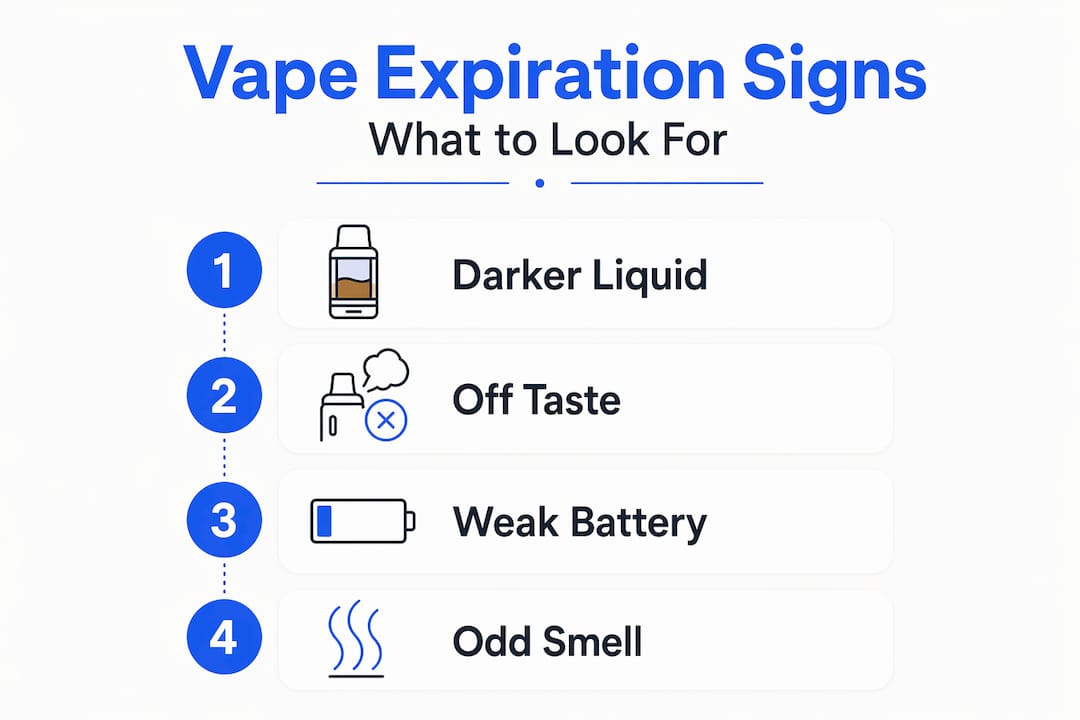
As expired vape juice research confirms, common symptoms include unusual darkening of the liquid, a strong peppery odor, faded top notes, sour or oxidized smell, separation between liquid layers, cloudiness, sediment at the bottom, abnormal viscosity, leakage complaints, and weaker or harsher nicotine delivery. Each of these is observable without any special tools.
Watch for these vape expiration signs before using any product that has been stored for a while:
- Color change. E-liquid that has shifted from its original clear or light-tinted color to a dark amber or brown has experienced significant nicotine oxidation.
- Unusual smell. Fresh e-liquid smells like its flavor profile. Expired liquid smells flat, sour, or chemical.
- Peppery taste. A sharp, peppery sensation on the inhale is a direct signal of nicotine oxidation.
- Cloudiness or sediment. Visible particles or haziness in the liquid indicate chemical separation that will affect both taste and device performance.
- Weaker vapor production. If a device that used to produce full clouds now outputs thin mist, the coil or the liquid itself has degraded.
- Device failing to activate. A disposable that requires multiple draws to produce vapor, or does not activate at all, may have a battery that has aged past its useful window.
- Leakage. Thinned-out e-liquid from temperature cycling or age can seep past seals that were designed for the original viscosity.
These are also useful as product quality indicators when evaluating whether a product you have is still worth using.
Pro Tip: If you are unsure about a device you have had for a while, take a single short draw before committing to a full session. A peppery, sour, or flat flavor on the first puff is a reliable signal to set it aside.
Best practices for storing vape products to maximize freshness
Identifying a degraded product is one skill. Preventing degradation in the first place is a better strategy. Proper storage extends vape shelf life noticeably and keeps your Geek Bar or other disposables tasting the way they were designed to.
Industry analysis on storage conditions puts it plainly: heat is the fastest enemy, UV light accelerates color and flavor changes, oxygen drives nicotine oxidation, and moisture changes PG and VG behavior. Addressing each of these four factors is the full scope of proper vape storage.
Follow these steps to protect your products:
- Store in a cool location. A drawer, cabinet, or interior shelf away from appliances is ideal. Room temperature around 60 to 70 degrees Fahrenheit is appropriate. Avoid areas near windows, stoves, or heating vents.
- Keep products out of direct sunlight. UV light breaks down nicotine and flavor compounds faster than almost any other single factor. A dark storage location matters even more than temperature in many cases.
- Keep products sealed until use. Oxygen exposure begins the moment packaging is opened. For bottled e-liquids, close the cap tightly after every use.
- Avoid high humidity environments. Bathrooms and areas near sinks expose products to moisture that affects PG behavior and can degrade packaging integrity over time.
- Do not leave liquid in an inactive device for months. A half-used disposable left untouched allows the e-liquid inside to sit against a warm coil, which accelerates both oxidation and thickening. Use devices regularly or finish them before setting them aside.
These storing disposable vapes principles apply equally to Geek Bar devices and any other sealed disposable format. You can also find additional vape storage tips that account for seasonal temperature changes if you live somewhere with significant climate variation.
Pro Tip: A simple airtight container in a cool, dark cabinet is more effective than any specialized storage product. The goal is to block the four enemies: heat, UV light, oxygen, and moisture.
Understanding disposable vape battery life and its relation to expiration
E-liquid freshness is only part of the expiration picture. The battery inside a disposable vape also has a finite lifespan that directly affects how long the device remains usable.
As Geek Bar battery data shows, most Geek Bar devices are designed so the battery lasts roughly as long as the e-liquid inside. Manufacturers match battery capacity to the rated puff count and e-liquid volume so both run out at approximately the same time. But that design assumption is based on normal usage patterns and proper storage.
Here is how battery life compares across different disposable formats:
| Device tier | Rated puff count | Battery capacity range | Rechargeable |
|---|---|---|---|
| Entry-level disposable | 500 to 600 puffs | 280 to 500 mAh | No |
| Mid-range disposable | 2,000 to 5,000 puffs | 500 to 850 mAh | Some models |
| Premium disposable | 10,000 to 20,000+ puffs | 850 to 1,500+ mAh | Yes |
Signs that your disposable vape battery lifespan is ending include:
- Weaker vapor production even with e-liquid still available
- Longer draw time needed to produce any vapor
- Device failing to activate despite proper technique
- Flashing LED indicators signaling low charge (on rechargeable models)
Rechargeable disposables like some higher-end Geek Bar models let you recharge via USB-C, which extends usability. But battery replacement is not possible. Once the battery degrades beyond a functional threshold, the device is done regardless of how much liquid remains. This is worth factoring in when you consider how long a device will realistically last if stored for extended periods before use.
Our perspective: The expiration conversation the vape industry avoids
Most product pages skip expiration details entirely. That silence is not a coincidence. Products that appear to last forever are easier to stock in bulk, easier to sell, and easier to return less often. But the absence of clear expiration guidance puts the user in a position where they have to figure it out after the fact, usually by noticing a bad taste or a dead battery.
The reality is straightforward. Vape products have a defined useful window. That window is well understood by manufacturers and documented in regulatory guidance. Printing a clear “best by” date rather than a coded batch number would give users the information they need upfront. Until that becomes standard practice across the industry, learning to read the signs of expiration yourself is the only reliable alternative.
The most practical takeaway is this: buy what you will use within a reasonable timeframe, store it correctly, and pay attention to how your device tastes and performs. Those three habits will serve you better than any label ever could.
Find fresh Geek Bar products at Cloud District
Knowing how to explain vape expiration is only useful if you start with fresh products in the first place.

At Cloud District, you can browse and order Geek Bar devices and other premium disposables with confidence. Products are sourced with quality and freshness in mind, and the streamlined local pickup process means you are not waiting for a package to travel across the country. Every purchase earns you Cloudz rewards, giving you value back on every order. Check current Geek Bar availability and exclusive deals directly on the Cloud District platform and keep your supply fresh.
Frequently asked questions
Does vape juice really expire if it’s unopened?
Yes. Even sealed, unopened vape juice has a shelf life of 12 to 24 months from the manufacture date, after which flavor quality, nicotine strength, and overall product integrity decline regardless of whether the bottle has been opened.
How can I tell if my disposable vape has expired?
The clearest signals are darkened or cloudy e-liquid, a peppery or sour vapor taste, weaker battery output, and unusual odors or leakage. These expired vape symptoms are visible and detectable without any special equipment.
Do disposable vape batteries expire before the e-liquid?
Manufacturers design battery capacity to last approximately as long as the e-liquid, but heavy use or improper storage can accelerate battery fade. As Geek Bar’s battery design confirms, the two are matched by intent, but real-world conditions can cause one to outlast the other.
What is the best way to store vape products to keep them fresh longer?
Store all vape products sealed in a cool, dry, and dark location. Keep them away from heat sources, direct sunlight, and humidity. Heat and UV exposure are the two fastest drivers of nicotine oxidation and flavor degradation, so eliminating both extends freshness significantly.