Vape Maintenance Guide: Keep Your Device Performing

Vape Maintenance Guide: Keep Your Device Performing
Vape maintenance is defined as the regular practice of cleaning, inspecting, and caring for your vaping device to preserve flavor quality, performance, and lifespan. It covers everything from wiping down mouthpieces and contacts to priming new coils, managing battery health, and disposing of old devices safely. Residue buildup causes muted flavor, airflow blockage, and device errors. That means skipping maintenance is not a minor inconvenience. It directly degrades your experience and shortens the life of your gear. Whether you use a pod system, a box mod, or a 510 pen, the same core principle applies: consistent upkeep keeps your device working the way it should.
What is vape maintenance and why does it matter?
Vape maintenance is the structured routine of cleaning and caring for each component of your vaping device. The industry term for this practice is device upkeep, though most vapers simply call it maintenance. It covers four core areas: cleaning, coil care, battery management, and safe disposal.
Gunk and residue buildup affect flavor clarity and device connectivity. Left unchecked, that buildup clogs airflow channels, weakens vapor production, and can trigger device errors. Regular cleaning removes that buildup before it causes real damage.
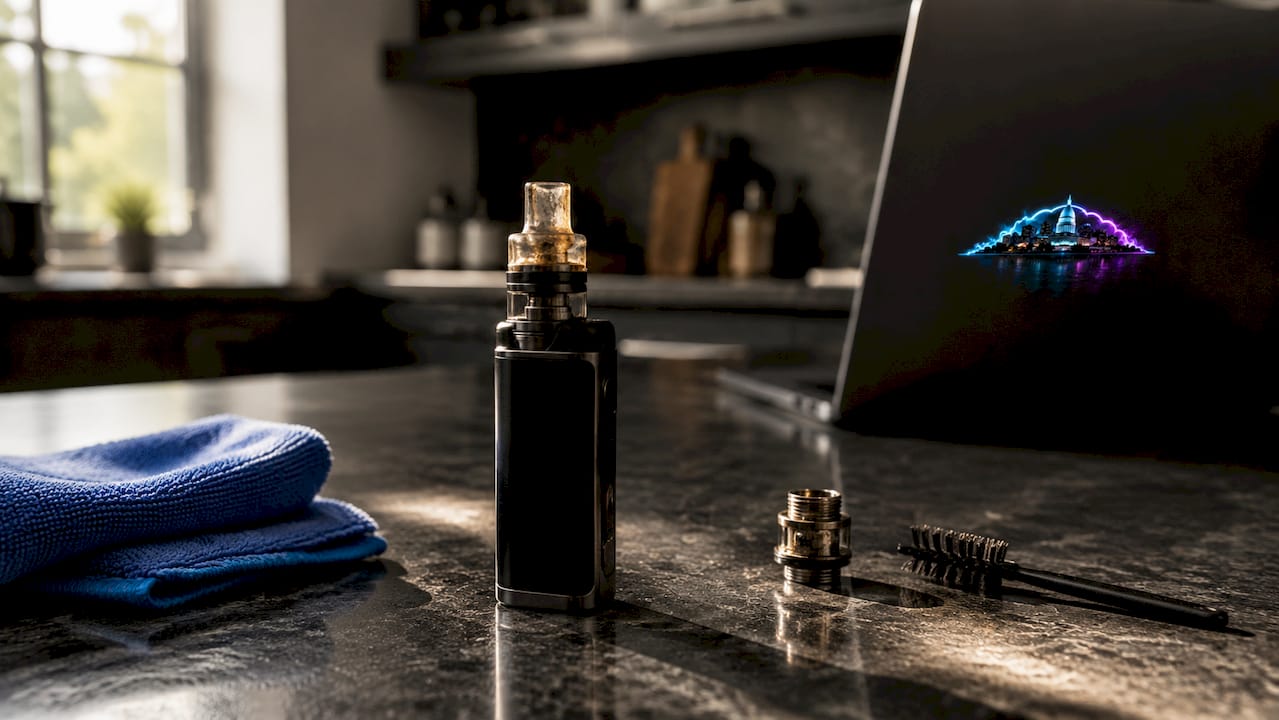
Battery health is the second major concern. Dirty contacts reduce charging efficiency and can cause connection failures. Storing devices in hot environments, like a car on a summer day, accelerates battery degradation. Proper storage and contact cleaning directly extend how long your battery performs reliably.
Coil care is the third pillar. A coil that burns out early wastes money and ruins flavor. Priming new coils correctly and recognizing early warning signs of wear prevents unnecessary replacements. The fourth area, safe disposal, protects both you and the environment when a device reaches end of life.
How often should you clean your vape device?
A practical vape maintenance schedule follows three tiers: quick daily tasks, a weekly light clean, and a deeper clean every two to four weeks.
Daily and every other day:
- Wipe the mouthpiece with a dry cloth or paper towel after each session
- Check battery contacts for visible residue or moisture
- Inspect the pod or tank for leaks before storing
Weekly:
- Remove the pod or tank and rinse the interior with warm water
- Wipe down external surfaces, including the battery section casing
- Check the airflow vents for visible blockage
Every 2–4 weeks (or when switching flavors):
- Fully disassemble the device into its separate components
- Soak tank and pod parts in warm water for 15–30 minutes
- Inspect air pathways and clear any residue with a cotton swab
- Allow all parts to dry completely before reassembly
Vapers who use their device heavily or switch flavors frequently should clean on the shorter end of that cycle. Light users can extend to the four-week mark without issue.
Pro Tip: Time your deep clean to coincide with a flavor change. You get a fresh start with no residual taste from the previous e-liquid, and your new flavor comes through cleanly from the first hit.
How to properly clean each vape component
Cleaning a vape device correctly requires separating the components first. Mixing up cleaning methods across parts is one of the most common mistakes vapers make, and it causes real damage.
- Separate all components. Remove the pod or tank, mouthpiece, and any removable sections from the battery unit. Never clean the battery section with liquids.
- Rinse e-liquid and herb-holding parts with warm water. Soak the tank or pod body for 15–30 minutes. Warm water dissolves most e-liquid residue without damaging seals or plastic components.
- Clean metal contacts and threads with isopropyl alcohol. Use 91% or higher isopropyl alcohol on a cotton swab to wipe battery contacts, threading, and connector pins. Lower concentrations leave too much water residue on metal surfaces.
- Never submerge the battery section. Wipe the exterior of the battery unit with a lightly dampened cloth only. Water inside the battery housing causes short circuits and permanent damage.
- Dry every part completely before reassembly. Lay components on a clean paper towel and allow at least one to two hours of air drying. Rushing this step causes problems.
Refilling a pod while parts are still damp causes gurgling, spitback, and weak hits. This is one of the most common post-cleaning errors, and it is entirely avoidable.
Pro Tip: After rinsing, stand components upright on a paper towel rather than laying them flat. Upright drying lets gravity pull residual water out of the openings instead of pooling inside.
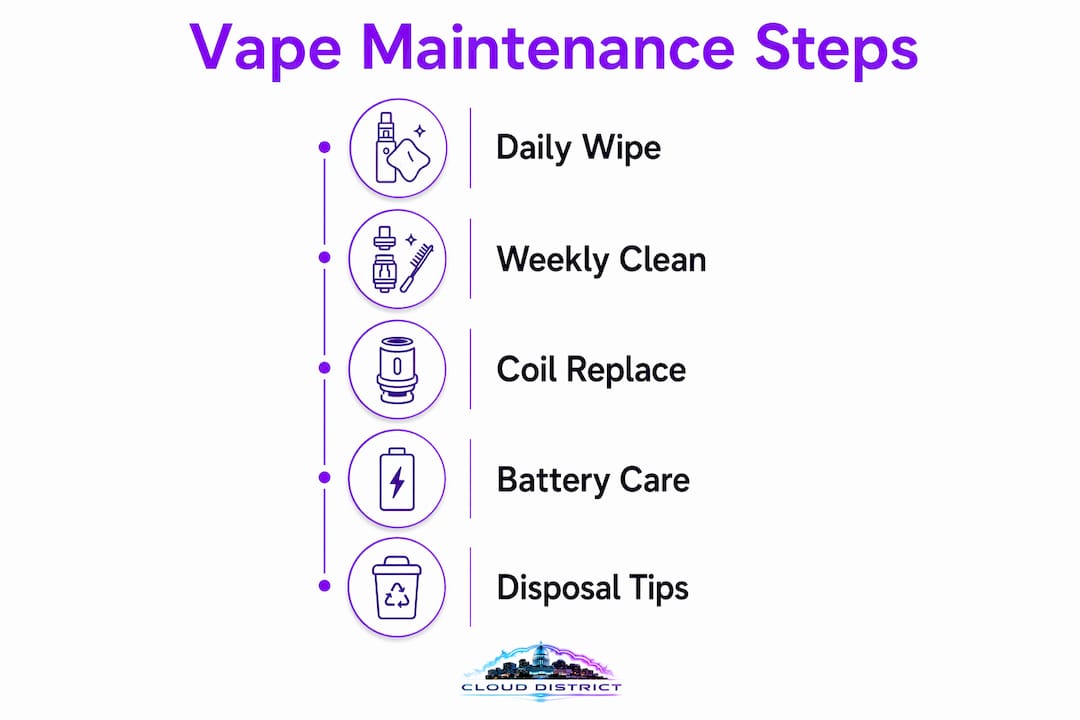
What vape care tips preserve coil life and battery performance?
Coil care and battery management are where most vapers save money on vapes over the long run. Both components degrade faster when mishandled, and both give clear warning signs before they fail completely.
Coil care best practices:
- Prime new coils by adding two to three drops of e-liquid directly onto the cotton wicking ports, then wait 5–10 minutes before your first hit. This saturates the wick and prevents dry burn overheating.
- Watch for early coil wear signs: muted or flat flavor, a gurgling sound during draws, and noticeably reduced vapor. Coils show subtle warning signs before full failure. Catching them early means replacing on your schedule, not mid-session.
- Stay within the recommended wattage range printed on the coil. Running above that range burns the cotton faster and shortens coil life significantly.
- Avoid chain vaping. Back-to-back hits without a short pause between them overheat the coil and dry out the wick before it can re-saturate.
Battery care best practices:
- Clean battery contacts with a dry cotton swab weekly. Residue on contacts reduces charging efficiency and can cause intermittent connection failures.
- Never leave your device in a hot car or direct sunlight. Heat exposure shortens battery life and, in extreme cases, creates safety risks.
- Store devices upright when not in use. Upright storage prevents e-liquid from migrating toward the battery contacts and causing corrosion.
- Charge batteries before they fully deplete. Lithium batteries in vape devices last longer when kept between 20% and 80% charge rather than cycled from empty to full repeatedly.
How do different vape device types affect maintenance routines?
Device type directly affects how you clean and maintain your gear. Treating all devices the same is a key cause of premature failure. A box mod with a removable 18650 battery has completely different maintenance needs than a sealed pod system or a dry herb vaporizer.
The table below summarizes the key differences across the four most common device types.
| Device type | Cleaning method | Coil/heating element | Battery access | Key risk |
|---|---|---|---|---|
| 510 pen | Warm water rinse of tank; wipe contacts | Replaceable coil head | Fixed internal | Flooding tank with overfill |
| Refillable pod system | Warm water rinse of pod; dry contacts | Replaceable pod coil | Fixed internal | Damp reassembly causing spitback |
| Box mod | Warm water for tank; isopropyl for mod body | Replaceable coil head | Removable 18650 | Battery venting from heat exposure |
| Dry herb vaporizer | Dry brush only; isopropyl for chamber walls | Ceramic/conduction oven | Fixed or removable | Water damage to heating chamber |
Dry herb vaporizers require a completely different approach. Water should never enter the heating chamber. Use a dry brush to clear loose herb debris after each session, then wipe the chamber walls with an isopropyl alcohol swab once a week. For rechargeable vape devices with removable batteries, inspect the battery wrap for tears before each charge. A torn battery wrap is a safety issue that requires immediate replacement.
What are safe disposal practices for old vape devices?
Disposing of a vape device is not the same as throwing away a plastic bottle. Vape devices contain lithium batteries, nicotine residue, and electronic components that qualify as hazardous waste under U.S. regulations.
The U.S. EPA recommends disposing of e-cigarettes at household hazardous waste collection sites. These sites exist in most counties and accept batteries, electronics, and chemical waste safely. Many municipalities also hold periodic collection events. Check your local government website for the nearest drop-off location.
Key disposal rules to follow:
- Do not attempt to remove embedded batteries or cartridges from sealed devices. Puncturing or dismantling these components creates a fire risk.
- Store devices awaiting disposal in a cool, dry location away from flammable materials.
- Transport devices to collection sites in a sealed plastic bag to contain any residual e-liquid.
- Check whether your local vape retailer participates in a take-back or recycling program. Some retailers accept old devices at the point of purchase.
Responsible disposal also reduces environmental contamination from heavy metals and nicotine compounds. For more context on eco-friendly vaping practices, including how to reduce the footprint of your vaping habit overall, the topic goes well beyond just device disposal.
Key Takeaways
Consistent vape maintenance requires a tiered cleaning schedule, correct component-specific techniques, proper coil priming, battery care, and responsible disposal to protect both device performance and personal safety.
| Point | Details |
|---|---|
| Follow a tiered cleaning schedule | Wipe contacts daily, light clean weekly, and deep clean every 2–4 weeks. |
| Match cleaning method to the component | Use warm water for tanks and pods; use 91%+ isopropyl alcohol on metal contacts only. |
| Prime every new coil | Add drops to the wick and wait 5–10 minutes before the first hit to prevent dry burn. |
| Store devices upright in cool conditions | Upright storage prevents leaks and contact corrosion; heat shortens battery life. |
| Dispose of devices at hazardous waste sites | The U.S. EPA directs vapers to household hazardous waste collection for safe disposal. |
Why I think most vapers underestimate the weekly clean
Most vapers I talk to skip straight to the deep clean when something goes wrong. They wait for the gurgling, the muted flavor, or the weak hit before they pick up a cotton swab. That reactive approach costs more in coils and pods than any five-minute weekly rinse ever would.
The weekly light clean is the most underrated step in the entire routine. It takes less time than brewing coffee, and it prevents the kind of buildup that makes a deep clean feel like a project. Small, consistent steps beat infrequent overhauls every time.
The other thing vapers consistently overlook is the drying step. Reassembling a damp device is the single most common cause of spitback complaints I hear. People clean their gear correctly, then rush the reassembly and blame the device. Patience after cleaning is as important as the cleaning itself.
Maintenance is not a chore. It is the difference between a device that performs well for a year and one that frustrates you within two months. Treat it like a small weekly investment, and your gear will return that investment in consistent flavor and reliable performance.
— Justin
Cloud District’s top picks for vapers who care about quality
Vapers who maintain their devices well know that quality gear responds to that care. A well-built device cleaned regularly delivers noticeably better flavor and more consistent performance than a neglected one.

Cloud District carries a curated selection of premium devices and disposables built for vapers who take their experience seriously. The Geek Bar RIA Fcuking Fab is a top-performing option for vapers who want reliable flavor without the complexity of a refillable system. For those who prefer a bold, fruit-forward profile, the Pulse Strawberry Kiwi Thermal Edition delivers consistent output from first hit to last. Every purchase earns Cloudz rewards, and Cloud District’s local pickup model means you get what you need without waiting.
FAQ
What is vape maintenance in simple terms?
Vape maintenance is the regular practice of cleaning your device components, managing battery health, replacing coils correctly, and storing your device properly to preserve performance and flavor.
How often should I clean my vape?
Wipe the mouthpiece and contacts every one to two days, do a light tank or pod clean once a week, and perform a full deep clean every two to four weeks or when switching e-liquid flavors.
What cleaning products are safe to use on a vape?
Warm water is safe for tanks, pods, and mouthpieces. Use 91% or higher isopropyl alcohol on metal contacts and threading. Never use water on the battery section or electronic components.
How do I know when my coil needs replacing?
The clearest signs are muted or flat flavor, a gurgling sound during draws, and reduced vapor output. Catching these early signals lets you replace the coil before it burns out completely.
Where do I dispose of old vape devices safely?
The U.S. EPA directs vapers to drop off e-cigarettes at household hazardous waste collection sites. Do not dismantle embedded batteries or cartridges, as doing so creates a fire risk.