Vape Mouthpiece Explained: Types, Materials, and Care

Vape Mouthpiece Explained: Types, Materials, and Care
A vape mouthpiece is the component you place your lips on to inhale vapor from a vaping device, directly controlling airflow, flavor delivery, and physical comfort. Also called a drip tip in the context of rebuildable and open-system devices, the mouthpiece is the single point of contact between you and your device. Its shape, material, and condition affect every draw you take. Choosing the right one and keeping it clean makes a measurable difference in how your device performs. This guide covers what a vape mouthpiece is, the materials and shapes available, and how to maintain and replace it properly.
What is a vape mouthpiece and why does it matter?
A vape mouthpiece is defined as the removable or fixed tube at the top of a vaping device through which vapor travels from the chamber to your mouth. It is not a passive component. The bore diameter, internal geometry, and material all regulate how much vapor you receive per draw and at what temperature it arrives.
The mouthpiece connects directly to the vapor path. A narrow bore restricts airflow, producing a tighter draw with denser, more concentrated flavor. A wider bore opens the airflow, delivering larger vapor clouds with a looser, airier feel. This distinction is the foundation of the mouth-to-lung (MTL) versus direct-to-lung (DTL) vaping debate, and the mouthpiece bore size is the primary hardware factor that separates the two styles.
Fit matters just as much as bore size. Loose or poorly fitted mouthpieces cause air leaks that produce inconsistent vapor density and unsatisfying draws. Original equipment manufacturer (OEM) components or exact-fit replacements are the reliable standard for maintaining consistent airflow.
What materials are vape mouthpieces made from?
Material choice affects heat management and flavor in ways most vapers underestimate. The six most common materials are borosilicate glass, stainless steel, titanium, plastic, resin, and silicone. Each has a distinct performance profile.
Borosilicate glass delivers the purest flavor because it does not interact chemically with vapor. It is easy to clean and does not retain odors. The trade-off is fragility. Glass mouthpieces crack under pressure and are a poor choice for travel.
Stainless steel and titanium are durable and long-lasting, but both conduct heat. At high wattages, a metal mouthpiece can become uncomfortably warm against your lips. Plastic sleeves or silicone covers reduce that heat transfer and improve comfort without replacing the mouthpiece entirely.
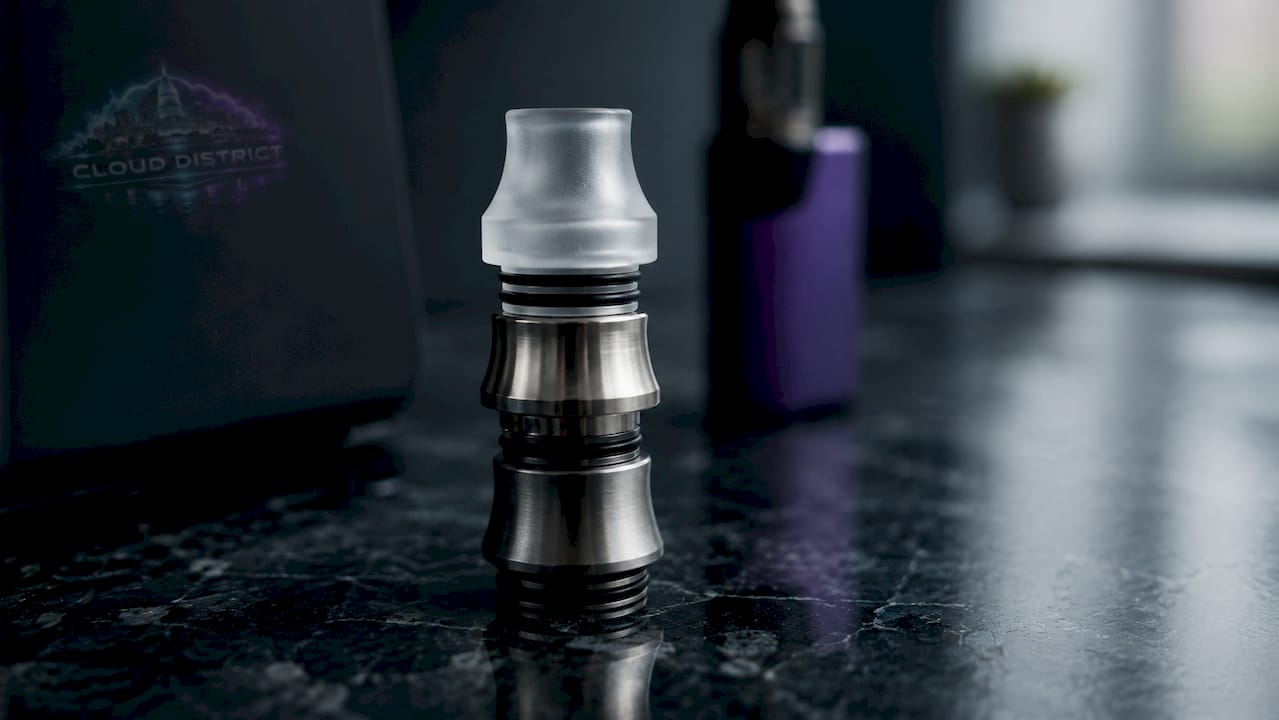
Plastic and resin insulate well and stay cool, making them the default material on most pod systems and disposables. The risk is degradation. High heat vaping devices require mouthpiece materials stable at elevated temperatures to avoid off-flavors from plastic breakdown. Resin holds up better than standard plastic at higher temperatures and offers more visual variety.
Silicone is soft, flexible, and comfortable for extended sessions. It is also easy to clean and does not conduct heat. The downside is that silicone can absorb flavor compounds over time, which subtly alters taste after heavy use.
| Material | Flavor neutrality | Heat resistance | Durability |
|---|---|---|---|
| Borosilicate glass | Excellent | Moderate | Low |
| Stainless steel | Good | High | High |
| Titanium | Good | High | Very high |
| Plastic / resin | Moderate | Low to moderate | Moderate |
| Silicone | Moderate | Moderate | High |
Pro Tip: If you vape at high wattages and notice a faint chemical taste, your plastic mouthpiece may be degrading. Switch to borosilicate glass or titanium for a cleaner flavor profile.
How does mouthpiece shape affect airflow and comfort?
Mouthpiece shapes vary significantly across flat, curved, round, tapered, and drip tip styles. Each shape changes the draw feel, vapor density, and how comfortable the device is to hold against your lips for extended periods.
Here is how the main shapes compare:
- Flat mouthpiece: Wide and oval, designed for MTL vaping. The flat profile spreads vapor across a larger surface area of the tongue, which many vapers find enhances flavor perception.
- Curved mouthpiece: Ergonomically curved designs fit natural lip contours better than flat or round shapes, reducing fatigue during long sessions. Pod systems use this shape most often.
- Round mouthpiece: Cylindrical and symmetrical. Common on pen-style devices. Comfortable for casual use but less ergonomic than curved options.
- Tapered mouthpiece: Narrows toward the tip, concentrating vapor flow and increasing draw resistance. Preferred by MTL vapers who want a cigarette-like feel.
- Drip tip: A term used specifically for removable mouthpieces on open-system and rebuildable devices. Drip tips come in 510 and 810 connector sizes. The 510 is narrower and suits MTL; the 810 is wider and suits DTL.
The internal bore diameter is the most functional variable. Mismatched bore sizes result in unsatisfying draws regardless of device quality. A DTL vaper using a narrow tapered tip will feel restricted. An MTL vaper using a wide 810 drip tip will get a loose, flavorless draw.
Pro Tip: If you are switching from cigarettes, a tapered or flat MTL mouthpiece replicates the draw resistance of a cigarette most closely. Start there before experimenting with wider bore options.
Ergonomic design is not just about comfort. The design for comfort is a key performance factor in pod systems, where the mouthpiece shape directly influences how consistently you draw and how much vapor you receive per puff. A poor fit leads to inconsistent technique, which produces inconsistent vapor output.
How to clean a vape mouthpiece properly
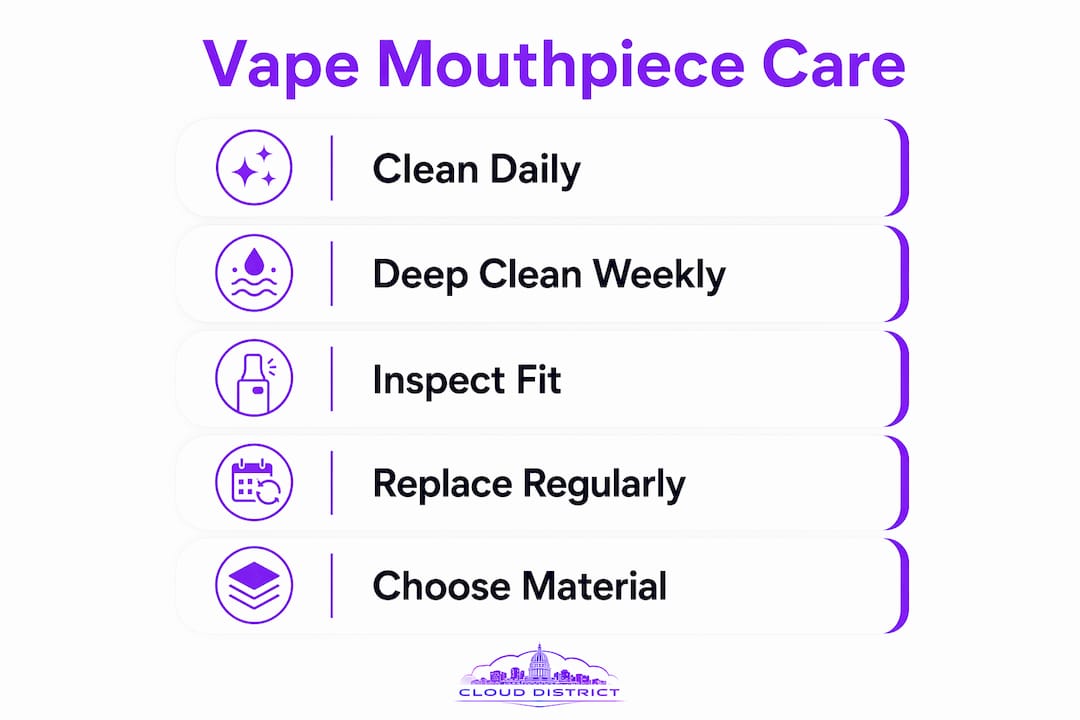
Regular cleaning is the single most effective maintenance habit for preserving flavor and hygiene. Perform a light wipe every 1–2 days and a deep clean every 2–4 weeks, or whenever you switch e-liquid flavors. Residue builds up faster than most vapers expect, and it dulls flavor noticeably.
Follow these steps for a thorough deep clean on a rechargeable device:
- Remove the mouthpiece from the device.
- Rinse it under warm water to loosen surface residue.
- Soak non-electronic parts in warm, soapy water for 10–15 minutes. For metal or glass mouthpieces, isopropyl alcohol removes residue more effectively than soap alone.
- Use a cotton swab or small brush to clean the interior bore.
- Rinse thoroughly and allow the mouthpiece to dry completely before reattaching. Moisture inside the vapor path can damage the coil.
For disposable devices, the process is simpler. A disposable vape is sealed, so internal cleaning is not possible. Wipe the exterior mouthpiece with a clean cloth or alcohol wipe every few days. That is the full extent of maintenance available.
Cleaning mouthpieces regularly reduces bacterial buildup, which protects your health and prevents unpleasant tastes. The residue that accumulates on a neglected mouthpiece is a mix of condensed vapor, saliva, and e-liquid. Left unchecked, it creates what vapers call “lip gunk,” a visible, sticky buildup that carries bacteria and mutes flavor significantly.
A few additional hygiene habits worth building:
- Never share a mouthpiece with another person.
- Store your device mouthpiece-down or with a cap to prevent dust accumulation.
- Replace the mouthpiece immediately if you notice cracks, discoloration, or persistent off-flavors after cleaning.
When should you replace a vape mouthpiece?
Replacing a worn or damaged mouthpiece restores hygiene, flavor quality, and device performance. Most vapers wait too long. The signs that a replacement is due are clear once you know what to look for:
- Visible damage: Cracks, chips, or warping in the material. A cracked mouthpiece creates air leaks and uneven draws.
- Persistent off-flavors: If deep cleaning does not restore clean flavor, the material itself has likely degraded or absorbed flavor compounds permanently.
- Discoloration: Yellowing or staining that does not clean off indicates material breakdown, especially in plastic mouthpieces.
- Poor fit: A mouthpiece that has loosened over time creates the air leaks that produce inconsistent vapor density.
- Hygiene reset: If you have been sick or shared your device, replace the mouthpiece rather than relying on cleaning alone.
Compatibility is the most important factor when selecting a replacement. Not every mouthpiece fits every device. Check your device’s connector size (510 or 810 for open systems, or the proprietary connector for pod systems) before purchasing. An incompatible mouthpiece will not seal correctly, which creates airflow problems regardless of material or shape quality.
Upgrading the mouthpiece is also a legitimate performance improvement. Switching from a stock plastic mouthpiece to borosilicate glass on the same device often produces a noticeable improvement in flavor clarity. The role of design in vape selection extends to accessories, and the mouthpiece is the most accessible upgrade available.
Key Takeaways
The mouthpiece is the most direct lever you have over airflow, flavor, and comfort. Choosing the right material and shape, then keeping it clean, produces a better vaping experience than upgrading the device itself.
| Point | Details |
|---|---|
| Material determines flavor | Glass delivers the purest flavor; plastic degrades at high heat and introduces off-tastes. |
| Bore size controls draw style | Narrow bores suit MTL vaping; wide bores suit DTL. Mismatched sizes ruin the draw. |
| Clean every 1–2 days | Light wipes prevent residue buildup; deep clean every 2–4 weeks to protect flavor and hygiene. |
| Replace at first sign of damage | Cracks, discoloration, and persistent off-flavors all signal that a replacement is overdue. |
| Fit is non-negotiable | A loose mouthpiece causes air leaks and inconsistent vapor density regardless of device quality. |
My honest take on mouthpiece selection
Most vapers spend hours researching devices and almost no time thinking about the mouthpiece. That is backwards. The mouthpiece is the only part of the device that touches your lips on every single draw. Its material and shape have a more immediate effect on your experience than coil resistance or battery capacity.
I have used glass, titanium, and resin mouthpieces on the same device with the same e-liquid, and the flavor difference between glass and degraded plastic is not subtle. Glass wins every time on flavor clarity. The fragility concern is real, but for home use it is manageable. For travel, a quality resin or titanium option is the practical choice.
The biggest mistake I see is vapers ignoring the MTL versus DTL distinction when choosing a replacement. A wide 810 drip tip on a device tuned for MTL vaping produces a thin, unsatisfying draw. Matching the bore to your vaping style is the single fastest fix for a device that feels “off.” If you are new to vaping, the beginner’s guide to choosing a vape covers this in more detail.
Cleaning is the other area where most vapers underperform. A two-minute wipe every couple of days prevents the kind of residue buildup that makes a perfectly good device taste stale. The maintenance habit is simple. The payoff in flavor quality is real.
— Justin
Premium vapes worth pairing with a clean mouthpiece
A well-maintained mouthpiece only delivers its full benefit when paired with a quality device. Cloud District carries a curated selection of premium vape products designed for consistent flavor and reliable performance.

The Pulse Strawberry Kiwi Thermal Edition is a strong starting point for vapers who want clean, accurate flavor from every draw. For something with a bolder profile, the RIA Sour Strawberry Dragon delivers sharp, layered flavor that rewards a well-maintained vapor path. Cloud District members earn Cloudz rewards on every purchase, with local pickup available for fast access to the products you need.
FAQ
What is a drip tip vs. a vape mouthpiece?
A drip tip is a specific type of removable mouthpiece used on open-system and rebuildable vaping devices. It connects via a 510 or 810 standard fitting, while a vape mouthpiece is the broader term for any inhalation component on any device type.
How often should you clean a vape mouthpiece?
Wipe the mouthpiece lightly every 1–2 days and perform a deep clean every 2–4 weeks. Clean sooner if you switch e-liquid flavors or notice any change in taste.
Can you use any mouthpiece on any vape device?
No. Mouthpiece compatibility depends on the connector size and device type. Open-system devices use standardized 510 or 810 fittings, while pod systems and disposables use proprietary connections that require exact-fit replacements.
What is the best material for a vape mouthpiece?
Borosilicate glass provides the best flavor neutrality and is the easiest to clean. For durability and travel use, titanium or quality resin are the practical alternatives.
Does mouthpiece shape affect flavor?
Yes. A narrow, tapered bore concentrates vapor and intensifies flavor. A wider bore dilutes vapor with more air, reducing flavor density. Matching bore size to your vaping style produces the most satisfying result.