What Is a Vape? Definition, Types, and Health Facts

What Is a Vape? Definition, Types, and Health Facts
Most people assume vaping produces harmless water vapor. That assumption is factually wrong. A vape is a battery-operated inhalation device that heats a liquid solution into an aerosol containing nicotine, chemical flavorings, and in many cases, heavy metals and carcinogens. Understanding exactly what a vape is, how it works, what it delivers to your lungs, and what the current science says is not a minor detail. It is the baseline information every adult should have before making any decision about vaping.
Table of Contents
- Key Takeaways
- What is a vape: definition, components, and how it works
- Common vape types and device styles
- What vapes deliver: ingredients and health implications
- Regulations, age restrictions, and safety considerations
- My perspective on vaping risks and informed choices
- Find vetted vape products at Cloud District
- FAQ
Key Takeaways
| Point | Details |
|---|---|
| Vapes produce aerosol, not vapor | The aerosol from a vape contains dissolved chemicals, not harmless water droplets. |
| Three core components power every device | A battery, a heating coil, and an e-liquid reservoir are found in every vape type. |
| Device types vary widely | Disposables, pod systems, and mods offer different levels of control and convenience. |
| Health risks are real and documented | Vaping aerosol contains nicotine, heavy metals, and carcinogens with confirmed health risks. |
| Legal age requirements apply | Federal law requires buyers to be 21 years or older to purchase vaping products. |
What is a vape: definition, components, and how it works
A vape is a battery-powered device designed to heat a liquid into an inhalable aerosol. The terms “vape,” “e-cigarette,” “vape pen,” and “electronic nicotine delivery system” all describe devices built on the same core principle. The three shared components across every device type are a battery, a heating element called a coil, and a reservoir that holds e-liquid, either a tank or a pod.
Here is how the process works in practical terms. When you activate the device, the battery sends electrical current to the coil. The coil heats up rapidly, and wick saturation cools the coil while transferring e-liquid onto its surface. The heat converts that liquid into a fine aerosol mist that you then inhale. No combustion occurs, which is why there is no smoke. But that does not mean what you inhale is clean or neutral.
The aerosol is a suspension of fine liquid droplets carrying dissolved chemicals directly into your lungs. This is a key distinction. Vaping aerosol is not water vapor. It is a chemical mixture that happens to be invisible to the eye.
Key components found in every vape device:
- Battery: Powers the heating element; capacity varies from small disposable cells to large rechargeable units
- Coil/heating element: The metal wire or mesh that heats e-liquid to aerosol temperature
- E-liquid reservoir: A pre-filled pod in disposables, or a refillable tank in rechargeable devices
- Mouthpiece: The point of contact where the user inhales the aerosol
- Airflow system: Controls draw resistance and vapor density
Pro Tip: If you are new to vaping terminology, review a vape terminology guide before purchasing. Knowing the difference between “draw-activated” and “button-activated” alone can save you from buying the wrong device type.
Common vape types and device styles
Vaping devices differ in refillability, battery life, and the level of customization they offer. That range matters because it directly affects your experience, cost, and how much technical knowledge you need. Understanding what a vape pod, vape mod, or disposable actually means gives you a practical foundation for any purchase decision.
| Device Type | Pros | Cons |
|---|---|---|
| Disposable vape | No setup, ready to use, compact | Not rechargeable (most), higher cost per puff |
| Vape pen | Slim design, refillable, affordable | Limited battery and power adjustability |
| Pod system | Refillable or pre-filled pods, portable | Pod compatibility varies by brand |
| Vape mod | High power, fully customizable, long battery | Bulky, complex for beginners |
| All-in-one (AIO) | Simple, portable, integrated design | Less customization than mods |
Disposable vapes are the most common entry point for new users. Brands like Geek Bar ship as fully sealed units with a pre-charged battery and pre-filled e-liquid. You use the device until it runs out, then dispose of it. No buttons, no refilling, no settings to configure.

Pod systems use a modular design where a small cartridge, called a pod, snaps into a battery unit. Some pods are pre-filled and replaced when empty. Others are refillable, letting you add your own e-liquid. Learn more about how disposable vapes work if you want to understand what separates them from pod-based options.
Vape mods sit at the advanced end of the spectrum. They accept replaceable coils, support variable wattage and temperature control, and can run tanks holding significantly more e-liquid. The rechargeable vapes category covers most of these options in detail. For most casual users, a disposable or basic pod system is more than sufficient.
What vapes deliver: ingredients and health implications
What is vape juice, exactly? Standard e-liquid is a mixture of propylene glycol, vegetable glycerin, nicotine, and chemical flavorings. Propylene glycol creates the “throat hit” sensation. Vegetable glycerin produces visible vapor clouds. Nicotine provides the stimulant effect. Flavoring compounds are where the range gets wide, with thousands of formulations in use across the industry.
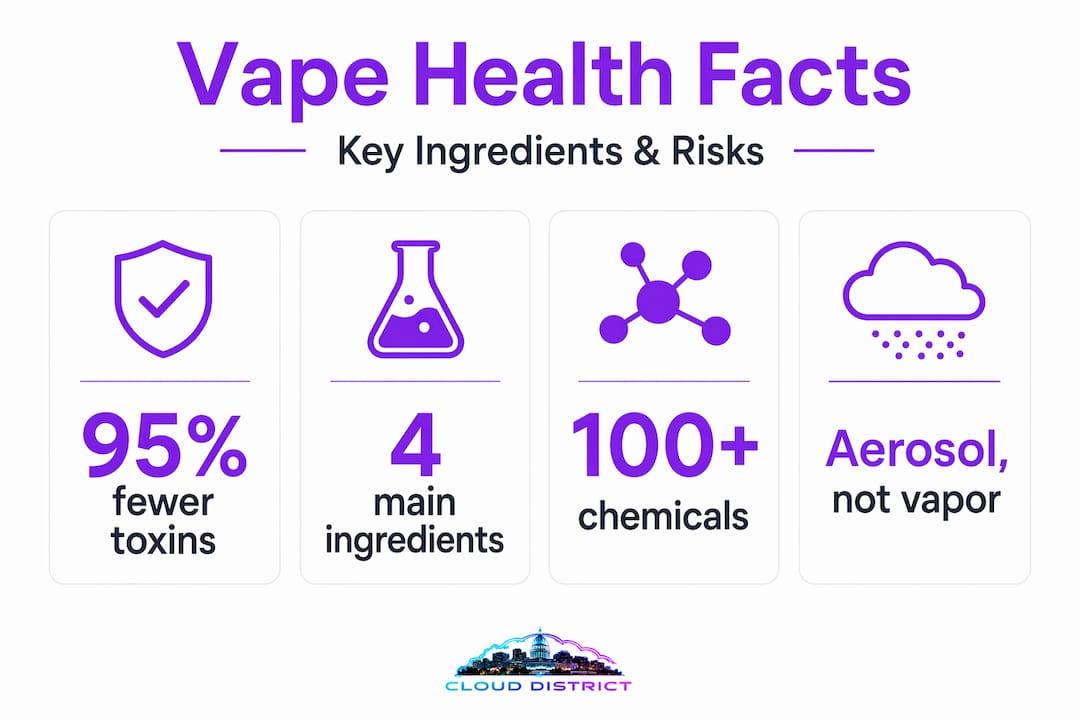
The problem is what else ends up in the aerosol. Research from the American Lung Association confirms that vaping aerosol contains heavy metals including nickel, tin, and lead, along with carcinogens such as formaldehyde, acrolein, and acetaldehyde. These come from the coil materials, e-liquid additives, and the heating process itself. Calling this water vapor is not just inaccurate. It is dangerously misleading.
Nicotine is highly addictive and has a documented negative effect on adolescent brain development. The risk of addiction persists even with low-nicotine or “nicotine-free” labeled products, some of which testing has shown still contain measurable nicotine levels. For those considering vaping as a smoking cessation method, current science does not support that conclusion. There is no conclusive evidence confirming vaping as an effective cessation tool, and some research suggests that youth who vape may actually start using combustible tobacco products.
To understand nicotine delivery in disposables, nicotine salt formulations used in modern devices absorb faster and at higher concentrations than traditional freebase nicotine in cigarettes. This is relevant for anyone managing intake or comparing vaping to prior smoking habits.
The WHO reported in 2025 that at least 15 million adolescents aged 13 to 15 currently vape, with adolescents nine times more likely to vape than adults in countries with available data. Scientific bodies urge strict regulatory control given the absence of long-term safety consensus.
Regulations, age restrictions, and safety considerations
Federal law in the United States sets the legal purchase age for all tobacco and nicotine products, including vapes, at 21 years or older. This is enforced under the FDA’s Tobacco 21 law. The PACT Act adds additional requirements: it bans USPS from shipping vaping products, mandates age verification at point of sale, requires adult presence at delivery, and enforces product labeling standards to protect youth under 21.
What does this mean in practice for consumers? It means you must purchase from vendors who comply with these regulations. A vendor who ships vaping products without age verification is not just acting irresponsibly. They are operating in violation of federal law. Knowing how to evaluate a vape vendor’s compliance is a basic consumer protection skill.
Beyond legal compliance, device safety is a real consideration. Follow these steps when purchasing and using any vape device:
- Verify authenticity before use. Counterfeit vape devices pose documented safety risks. Reputable vendors publish batch codes and serial numbers on product packaging for authentication. If a device has no verifiable code, treat it as potentially counterfeit.
- Check battery condition regularly. Swollen, damaged, or leaking batteries are a fire risk. Use only the provided charger or a manufacturer-specified equivalent.
- Avoid dry hits. A dry hit occurs when the coil heats without sufficient e-liquid saturation. The result is a harsh, burnt taste and potential exposure to degraded coil material. Keep tanks and pods adequately filled.
- Purchase from regulated retailers. Not all vape vendors operate under the same compliance standards. Selecting a vetted marketplace reduces exposure to substandard or counterfeit products.
- Store devices away from extreme heat. High temperatures can cause e-liquid to thin and leak, or in rare cases, cause battery failure.
Pro Tip: When checking a device’s authenticity, go directly to the manufacturer’s website and use their official verification tool. Do not rely solely on third-party assurances or reseller claims.
My perspective on vaping risks and informed choices
What I have found most striking in covering vaping is how consistently the public conversation oversimplifies the issue in both directions. On one side, you have people insisting vaping is essentially harmless because there is no combustion. On the other, some characterize vaping as indistinguishable from smoking. Neither position holds up under scrutiny.
My view is that vaping occupies a distinct category with its own risk profile. The absence of combustion is real and meaningful. A person who switches from cigarettes to vaping is almost certainly reducing their exposure to tar and combustion byproducts. But reducing one set of risks does not mean eliminating risk. The presence of heavy metals and carcinogens in vaping aerosol is documented, not theoretical.
What concerns me more than the adult use debate is the youth uptake problem. The data is not ambiguous. Adolescents are taking up vaping at rates that could reverse decades of tobacco control progress. The appeal of compact devices and candy-adjacent flavors is not accidental product design. It is a deliberate market strategy, and regulators are still catching up to it.
The practical advice I give anyone asking about vaping: read the actual research, not just the product marketing. Understand what is in the device you are using. And if you are under 21, or buying for someone who is, the law is unambiguous on this point. There is no gray area.
— Justin
Find vetted vape products at Cloud District
If you are 21 years or older and looking for a trusted source for vaping products, Cloud District provides a structured, compliant purchasing experience.

Cloud District is a vape marketplace that carries top disposable brands including Geek Bar, alongside a curated selection of pods and rechargeable options. Every purchase goes through age verification in accordance with federal requirements. The platform is built for speed and simplicity: browse products, confirm your eligibility, and pick up locally. Cloud District’s built-in rewards program, called Cloudz, lets you earn on every qualifying purchase. There are no workarounds, no unverified vendors, and no ambiguity about compliance. Browse the full product catalog to see current availability, or explore the brands page to find specific manufacturers and product lines. All users must be 21 years or older to view and purchase products.
FAQ
What is a vape, exactly?
A vape is a battery-operated device that heats an e-liquid containing nicotine, flavorings, and other chemicals into an inhalable aerosol. It is not a tobacco product in the traditional sense, but it carries documented health risks.
What is vape juice made of?
Vape juice typically contains propylene glycol, vegetable glycerin, nicotine, and chemical flavorings. Testing has also found heavy metals and carcinogens including formaldehyde and acrolein in the resulting aerosol.
What is a vape pod versus a vape mod?
A vape pod is a compact, cartridge-based device designed for simplicity and portability, with limited customization. A vape mod is a larger, more powerful device with adjustable wattage and temperature settings for experienced users.
Is vaping safer than smoking?
Current evidence suggests vaping exposes users to fewer combustion byproducts than traditional cigarettes, but the aerosol still contains harmful chemicals. There is no scientific consensus confirming vaping is safe, and long-term effects remain under study.
What is the legal age to purchase a vape in the United States?
Federal law requires buyers to be 21 years or older to purchase any vaping or nicotine product. The PACT Act also bans USPS shipping of vaping products without verified age confirmation at delivery.